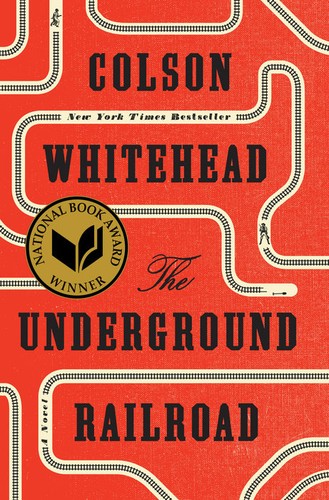
The Underground Railroad
Colson Whitehead (2016)
“America reimagined as a series of nightmares — each state a different way the same country has always found to destroy Black lives.”
The Underground Railroad— Summary & Analysis
by Colson Whitehead · published 2016 · 306 pages · Contemporary / Neo-Slave Narrative
A user-friendly study guide for The Underground Railroad by Colson Whitehead (2016): a high-level plot summary, full chapter-by-chapter analysis, theme breakdowns, character profiles, and 30 essay questions designed for ap-english, college readers. Unlike a stock summary, sumsumsum.com adds a diction analysis drawn from Colson Whitehead’s actual text, the 4 documented AP Literature exam appearances of this book, and reading-difficulty guidance (Easy, 3/10) so students, teachers, and lifelong readers know what they are walking into.
“America reimagined as a series of nightmares — each state a different way the same country has always found to destroy Black lives.”
Short Summary
Cora, a young enslaved woman on a Georgia cotton plantation, flees north with a man named Caesar, discovering that the Underground Railroad is a literal subterranean network of tunnels and trains. Each state she passes through — South Carolina, North Carolina, Tennessee, Indiana — presents a different vision of American racism: medical experimentation, genocide, violent suppression, and liberal paternalism that ultimately fails her. Hunted by the relentless slave catcher Arnold Ridgeway, Cora fights to survive a country that has declared her property. The novel ends with Cora moving west, toward an unknown freedom, having survived everything America could build to stop her.
Detailed Summary
Cora lives on the Randall plantation in Georgia — one of the most brutal in the county. Her mother Mabel escaped years ago and never returned, leaving Cora without protection on a plantation where she is assigned a tiny plot of garden as her only inheritance. When a fellow enslaved man named Caesar ...
Summary in the Author’s Writing Style
A retelling of The Underground Railroad in Colson Whitehead’s style — so you can hear the language, not just the plot. This is a stylistic pastiche written by sumsumsum, not an excerpt from the book.
The Randall plantation in Georgia was one of the worst in the county, and Cora knew it the way she knew her own hands. Her mother Mabel had run years before and never come back. She left Cora a scrap of garden and nothing else. On a plantation the size of Randall, a girl with no protection learned w…
Chapter-by-Chapter Analysis
If you liked The Underground Railroad, read next
Start with Narrative of the Life of Frederick Douglass by Frederick Douglass — The original American freedom narrative that Whitehead is in explicit conversation with — Douglass's first-person testimony versus Whitehead's third-person compression. Or pivot to The Water Dancer by Ta-Nehisi Coates — Another contemporary neo-slave narrative with a magical-realist conceit — published three years after The Underground Railroad, clearly in its shadow, and a useful comparison for what the conceit can and can't do.
For comparative essays, pair The Underground Railroad with
The strongest comparative pairing is Beloved (Toni Morrison) — The defining predecessor of the neo-slave narrative — where Morrison uses haunting and hallucinatory prose, Whitehead uses architectural restraint; both are essential. Another productive pairing is Kindred (Octavia Butler) — Another genre-crossing neo-slave narrative with a speculative conceit (time travel rather than literal railroad) used to put a contemporary Black person inside the physical reality of slavery. For a third angle, contrast with Twelve Years a Slave (Solomon Northup) — The nineteenth-century source document — the real first-person account of kidnapping and slavery that the fictional tradition Whitehead works in descended from.
Each of these pairings opens a clean thesis path on shared themes, period diction, or formal influence — useful for AP Lit / IB / first-year college comparative essays.