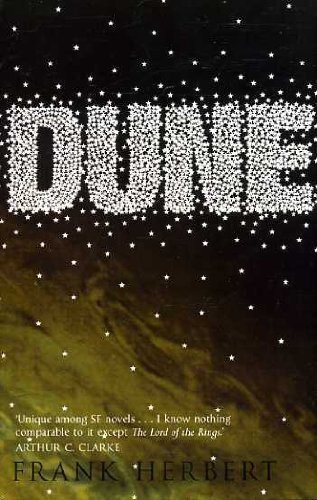
Dune
Frank Herbert (1965)
“The greatest science fiction novel ever written — a desert planet, a chosen boy, and a prophecy that might be the galaxy's greatest manipulation.”
At a Glance
On the desert planet Arrakis — the only source of the spice mélange, the most valuable substance in the universe — young Paul Atreides is thrust into a deadly political trap when his family is ordered to govern the planet. Betrayed by a rival House and left for dead, Paul and his mother Jessica flee into the deep desert and find refuge among the Fremen, the planet's fierce indigenous people. Paul discovers he may be the prophesied messiah the Fremen have waited generations for — or a carefully engineered product of manipulation. He masters the desert, rides the great sandworms, and leads the Fremen to revolution — but his victory comes at the cost of setting an interstellar holy war into motion he cannot stop.
Read full summary →Why This Book Matters
Dune is the best-selling science fiction novel of all time — over 20 million copies sold, continuously in print since 1965. It won both the Hugo Award (science fiction's highest honor) and the first Nebula Award in 1966. It invented ecological world-building as a literary practice — no science fiction or fantasy novel before Dune had designed a planet as a complete ecological system and made that system the engine of the plot. It established the template for the epic fantasy and science fiction genre as practiced by George Lucas (Star Wars draws heavily on Dune's mythology), James Cameron, and dozens of major franchise creators. And it did all of this while consistently resisting the heroic narrative it appears to be telling.
Diction Profile
Formal, scholarly, with technical worldbuilding vocabulary drawn from Arabic, Persian, Hebrew, Berber, and ecological science
High