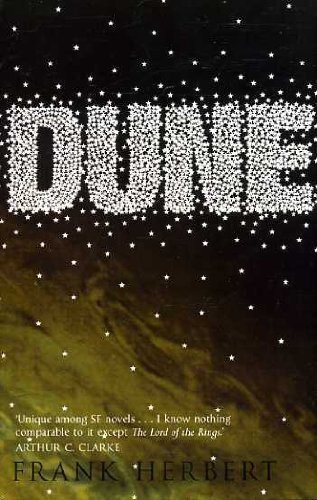
Dune
Frank Herbert (1965)
“The greatest science fiction novel ever written — a desert planet, a chosen boy, and a prophecy that might be the galaxy's greatest manipulation.”
Similar Books
Thematic connections across eras and genres — books that talk to each other.
Foundation
Isaac Asimov
Galactic empire collapse, one man navigating civilizational crisis — but Asimov is optimistic about rational planning; Herbert is deeply skeptical of anyone who thinks they can guide history
The Left Hand of Darkness
Ursula K. Le Guin
The other great 1960s SF epic built on anthropological research — Le Guin's Gethen is Dune's Arrakis in rigor and cultural completeness, but Le Guin centers gender where Herbert centers ecology
Childhood's End
Arthur C. Clarke
Messianic transformation at civilizational scale — but Clarke embraces transcendence; Herbert is terrified of it
The Dispossessed
Ursula K. Le Guin
Another science fiction novel structured as a critique of its own apparent values — Le Guin's Anarres is as ambivalent as Herbert's Arrakis
Blood Meridian
Cormac McCarthy
The other great American novel about violence as destiny and the impossibility of heroic narrative — McCarthy strips away Herbert's mythology; the desert remains
One Hundred Years of Solitude
Gabriel García Márquez
Colonial history rendered through magical thinking and prophecy — García Márquez and Herbert are both writing about the weight of history on colonized peoples, one through Latin American magical realism, the other through science fiction