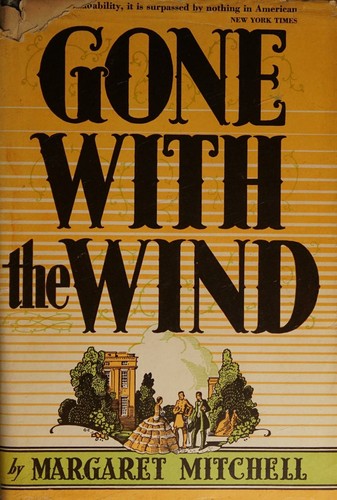
Gone with the Wind
Margaret Mitchell (1936)
“A thousand-page monument to one woman's refusal to be destroyed -- and a deeply uncomfortable window into how America romanticized its own worst history.”
At a Glance
Scarlett O'Hara, the headstrong daughter of an Irish immigrant plantation owner in Georgia, navigates the destruction of the Civil War and Reconstruction by sheer ruthlessness and survival instinct. She marries three times -- first for spite, then for money, finally for passion -- while obsessively pursuing Ashley Wilkes, a man who represents the old South she's already outgrown. Her third husband, Rhett Butler, is the only man who sees through her, loves her anyway, and ultimately walks away when she destroys his capacity to care. By the end, Scarlett has lost nearly everything -- Rhett, her daughter Bonnie, Melanie's friendship -- but still believes she can get it all back tomorrow.
Read full summary →Why This Book Matters
The bestselling American novel of the twentieth century -- over 30 million copies sold worldwide. Won the Pulitzer Prize in 1937. The 1939 David O. Selznick film adaptation, starring Vivien Leigh and Clark Gable, became the highest-grossing film of all time (adjusted for inflation, it arguably still is). The novel defined popular understanding of the Civil War for generations, for better and (mostly) worse -- its Lost Cause mythology shaped how Americans understood Reconstruction until the civil rights movement forced a reckoning.
Diction Profile
Elevated narrative voice with deep dialect variation in dialogue -- literary Southern English for narration, phonetically rendered dialect for Black characters and poor whites, studied gentility for the planter class
Moderate -- Mitchell relies more on physical description and dramatic irony than on metaphor. Her strongest figurative work centers on the land (Tara's red earth as blood, identity, covenant) and on fire (Atlanta burning as the death of a civilization). Her prose is more cinematic than poetic -- she builds images rather than metaphors.