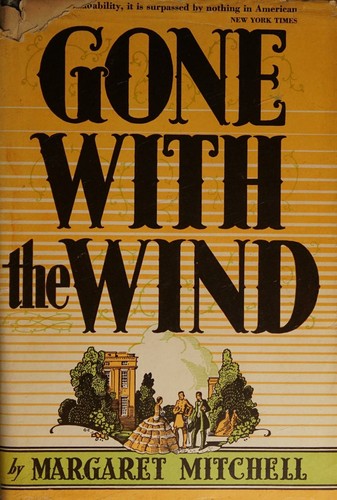
Gone with the Wind
Margaret Mitchell (1936)
“A thousand-page monument to one woman's refusal to be destroyed -- and a deeply uncomfortable window into how America romanticized its own worst history.”
Gone with the Wind— Literary & Historical Significance
Why This Book Matters
The bestselling American novel of the twentieth century -- over 30 million copies sold worldwide. Won the Pulitzer Prize in 1937. The 1939 David O. Selznick film adaptation, starring Vivien Leigh and Clark Gable, became the highest-grossing film of all time (adjusted for inflation, it arguably still is). The novel defined popular understanding of the Civil War for generations, for better and (mostly) worse -- its Lost Cause mythology shaped how Americans understood Reconstruction until the civil rights movement forced a reckoning.
Firsts & Innovations
One of the first American novels to center a female antiheroine -- Scarlett is selfish, manipulative, and utterly compelling
Pioneered the wartime domestic perspective in popular fiction -- the war seen through women who survive it rather than men who fight it
One of the first novels to treat Reconstruction as a narrative subject at epic scale, though its treatment is ideologically compromised
Cultural Impact
The 1939 film remains one of the most-watched movies in history and a cultural touchstone whose racial politics provoke ongoing controversy
'Frankly, my dear, I don't give a damn' voted the greatest movie line in American cinema by the AFI
Hattie McDaniel became the first Black American to win an Academy Award for her portrayal of Mammy -- and was forced to sit at a segregated table at the ceremony
'Tomorrow is another day' entered the language as an expression of resilient optimism, often stripped of its original ambiguity
The novel's romanticization of the plantation South helped sustain Lost Cause mythology well into the twentieth century
Alice Randall's The Wind Done Gone (2001) retold the story from the perspective of an enslaved woman, provoking a copyright lawsuit and a national conversation about who owns history
Banned & Challenged
Challenged for racial language, romanticization of slavery, and positive portrayal of the Ku Klux Klan. HBO Max temporarily removed the 1939 film in 2020 during racial justice protests, then restored it with a contextual introduction. The novel remains on many school reading lists but is increasingly taught with critical framing about its racial politics rather than presented as straightforward historical fiction.