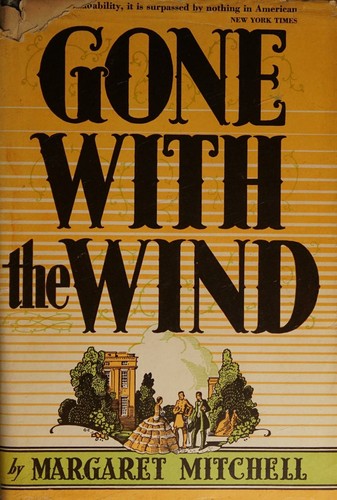
Gone with the Wind
Margaret Mitchell (1936)
“A thousand-page monument to one woman's refusal to be destroyed -- and a deeply uncomfortable window into how America romanticized its own worst history.”
For Students
Because this is the novel that taught America its wrong history of the Civil War -- and you need to understand what that wrong history looks like from the inside. Scarlett O'Hara is one of the most compelling characters in fiction: selfish, brilliant, indestructible, and completely blind to the suffering her world is built on. Reading Gone with the Wind teaches you how narrative seduces -- how a skilled storyteller can make you root for a protagonist whose values you reject, and how a romanticized version of history can feel more real than the facts. At 1,037 pages, it is also a genuine endurance test and one of the most propulsive reads in American literature.
For Teachers
A masterclass in unreliable sympathy -- the novel forces students to grapple with a protagonist they like but shouldn't trust, a narrator who shares the characters' blind spots, and a version of history that was accepted as fact for decades. Pairs powerfully with primary sources on Reconstruction, with Toni Morrison's Beloved, with Alice Randall's The Wind Done Gone. The diction analysis alone can fuel weeks of discussion: dialect as racial marker, code-switching as survival, the politics of whose speech gets rendered 'correctly.'
Why It Still Matters
Scarlett's survival instinct -- doing whatever it takes, worrying about the moral cost later -- is the logic of every startup founder, every political operative, every person who has ever sacrificed a relationship for a career. Rhett's arc -- the cynic who falls in love and discovers that love is the one thing cynicism can't protect you from -- is timeless. And the question the novel asks at every level -- what do you sacrifice to survive, and is what survives still worth being? -- has no era.