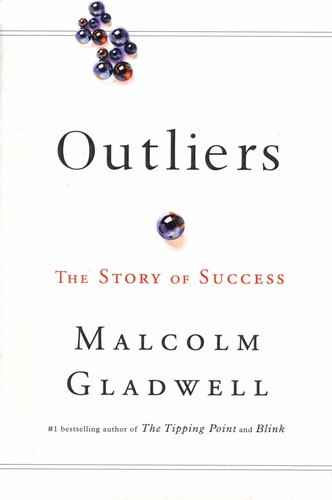
Outliers: The Story of Success
Malcolm Gladwell (2008)
“The book that shattered the myth of the self-made genius by revealing that extraordinary success is less about individual talent and more about hidden advantages, cultural legacies, and the 10,000-hour rule.”
This page prints on a single page. Use Ctrl+P / Cmd+P.
Outliers: The Story of Success
Malcolm Gladwell (2008) · 309pages · Contemporary Social Science / Popular Nonfiction
Summary
Malcolm Gladwell argues that individual talent and hard work, while necessary, are insufficient to explain extraordinary success. Through case studies ranging from Canadian hockey players to Bill Gates to Korean airline pilots, Gladwell demonstrates that success depends on hidden factors — birth timing, cultural inheritance, access to practice opportunities, and historical accident — that the myth of the 'self-made' individual systematically obscures.
Why It Matters
Outliers permanently changed the popular conversation about success, talent, and meritocracy. The 10,000-hour rule entered common language. The structural critique of the self-made individual narrative influenced education policy, corporate diversity initiatives, and public discourse about inequa...
Themes & Motifs
Diction & Style
Register: Conversational but substantive — Gladwell writes with the accessibility of a magazine journalist and the ambition of a social scientist. The prose is clean, vivid, and paced for sustained engagement. Technical concepts are introduced through stories rather than definitions.
Narrator: Third-person journalistic with first-person frame in the epilogue. Gladwell positions himself as a guide through coun...
Figurative Language: Low
Historical Context
Late 2000s America — Financial Crisis, Meritocracy Debate, Growing Inequality Awareness (2008): Outliers was published in November 2008, two months after the Lehman Brothers collapse. The financial crisis had just demonstrated, spectacularly, that expert judgment was unreliable, that structur...
Key Characters
Talking Points
- The Canadian hockey birth-date data shows that elite players are disproportionately born in the first three months of the year. What specific policy changes could hockey (or education, or other youth development systems) implement to reduce this bias? Why haven't they been implemented?
- The 10,000-hour rule has been challenged by researchers who argue that Gladwell oversimplified the original research. What specific criticisms have been raised, and how do they affect the broader argument about practice, opportunity, and mastery?
- Gladwell argues that Bill Gates's success depended on being born at exactly the right time and having unusual access to computing resources. Apply this 'timing and access' analysis to a contemporary technology figure (Mark Zuckerberg, Elon Musk, Jensen Huang). What structural advantages were necessary for their success?
- Gladwell distinguishes between 'concerted cultivation' (middle-class parenting that develops institutional navigation skills) and 'natural growth' (working-class parenting that provides love but not institutional preparation). Is this distinction useful or does it oversimplify class differences in parenting?
- The Korean Air chapter argues that national culture (Power Distance) caused cockpit communication failures. Is this cultural determinism? Can individual behavior be attributed to national culture without stereotyping? How should we think about the relationship between culture and individual agency?
Notable Quotes
“In Outliers, I want to convince you that these kinds of personal explanations of success don't work. People don't rise from nothing.”
“Success is not a random act. It arises out of a predictable and powerful set of circumstances and opportunities.”
“Practice isn't the thing you do once you're good. It's the thing you do that makes you good.”
Why Read This
Because the story you've been told about success — that it comes from talent and hard work alone — is incomplete, and the incomplete story has consequences. If you believe success is purely individual, then failure must be purely individual too, a...