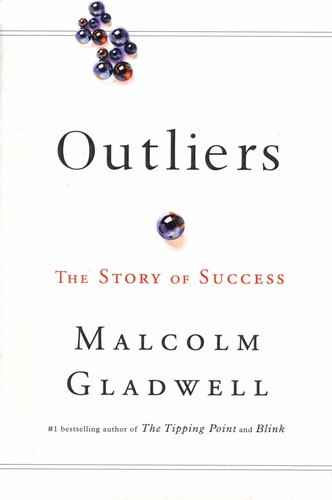
Outliers: The Story of Success
Malcolm Gladwell (2008)
“The book that shattered the myth of the self-made genius by revealing that extraordinary success is less about individual talent and more about hidden advantages, cultural legacies, and the 10,000-hour rule.”
Outliers: The Story of Success— Summary & Analysis
by Malcolm Gladwell · published 2008 · 309 pages · Contemporary Social Science / Popular Nonfiction
A user-friendly study guide for Outliers: The Story of Success by Malcolm Gladwell (2008): a high-level plot summary, full chapter-by-chapter analysis, theme breakdowns, character profiles, and 14 essay questions designed for high-school, ap-english, college readers. Unlike a stock summary, sumsumsum.com adds a diction analysis drawn from Malcolm Gladwell’s actual text, and reading-difficulty guidance (Easy, 2/10) so students, teachers, and lifelong readers know what they are walking into.
“The book that shattered the myth of the self-made genius by revealing that extraordinary success is less about individual talent and more about hidden advantages, cultural legacies, and the 10,000-hour rule.”
Short Summary
Malcolm Gladwell argues that individual talent and hard work, while necessary, are insufficient to explain extraordinary success. Through case studies ranging from Canadian hockey players to Bill Gates to Korean airline pilots, Gladwell demonstrates that success depends on hidden factors — birth timing, cultural inheritance, access to practice opportunities, and historical accident — that the myth of the 'self-made' individual systematically obscures.
Detailed Summary
Outliers is structured in two parts: 'Opportunity' and 'Legacy.' Part One examines how external circumstances — timing, geography, access to resources — create the conditions in which talent can develop. Part Two examines how cultural inheritance — values, communication patterns, attitudes toward au...
Chapter-by-Chapter Analysis
If you liked Outliers: The Story of Success, read next
Start with Freakonomics by Steven D. Levitt and Stephen J. Dubner — Similar counterintuitive-revelation structure and similar mission: using social science to challenge conventional explanations. Freakonomics uses economic analysis where Gladwell uses sociological and psychological research, but both aim to make hidden structures visible.. Then try Mindset by Carol S. Dweck — Dweck's research on growth mindset vs. fixed mindset complements Gladwell's cultural analysis of effort beliefs. Gladwell argues that cultural attitudes toward effort shape achievement; Dweck provides the psychological mechanism through which those attitudes operate.. Or pivot to Unequal Childhoods by Annette Lareau — The academic source for Gladwell's argument about concerted cultivation and practical intelligence. Lareau's ethnographic study provides the detailed evidence that Gladwell summarizes and popularizes in the genius chapters..