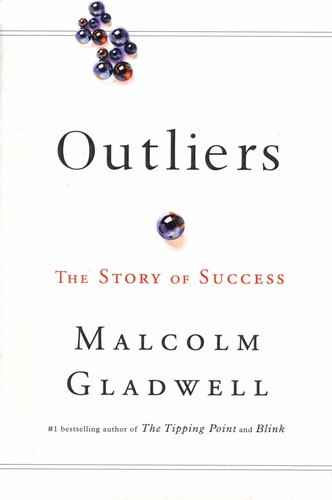
Outliers: The Story of Success
Malcolm Gladwell (2008)
“The book that shattered the myth of the self-made genius by revealing that extraordinary success is less about individual talent and more about hidden advantages, cultural legacies, and the 10,000-hour rule.”
Similar Books
Thematic connections across eras and genres — books that talk to each other.
The Tipping Point
Malcolm Gladwell
Gladwell's first book examines how small changes produce large effects — a complementary analysis to Outliers' argument about how small initial advantages compound into large outcome differences. Both books are structured around counterintuitive explanations of visible phenomena.
Freakonomics
Steven D. Levitt and Stephen J. Dubner
Similar counterintuitive-revelation structure and similar mission: using social science to challenge conventional explanations. Freakonomics uses economic analysis where Gladwell uses sociological and psychological research, but both aim to make hidden structures visible.
Mindset
Carol S. Dweck
Dweck's research on growth mindset vs. fixed mindset complements Gladwell's cultural analysis of effort beliefs. Gladwell argues that cultural attitudes toward effort shape achievement; Dweck provides the psychological mechanism through which those attitudes operate.
Unequal Childhoods
Annette Lareau
The academic source for Gladwell's argument about concerted cultivation and practical intelligence. Lareau's ethnographic study provides the detailed evidence that Gladwell summarizes and popularizes in the genius chapters.
Grit
Angela Duckworth
Duckworth's research on perseverance and passion — which she calls 'grit' — provides the psychological complement to Gladwell's structural analysis. Gladwell shows that opportunity matters; Duckworth shows that persistence within opportunity matters. Together they offer a more complete picture than either alone.
The Power of Habit
Charles Duhigg
Duhigg writes in a similar narrative-journalism style and covers related territory — the hidden mechanisms behind visible behavior. Where Gladwell focuses on structural opportunity, Duhigg focuses on the behavioral mechanisms (habits) through which opportunity and cultural inheritance operate.