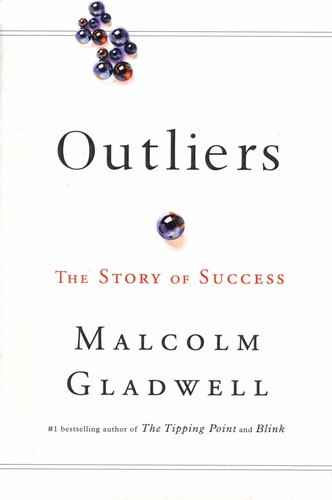
Outliers: The Story of Success
Malcolm Gladwell (2008)
“The book that shattered the myth of the self-made genius by revealing that extraordinary success is less about individual talent and more about hidden advantages, cultural legacies, and the 10,000-hour rule.”
For Students
Because the story you've been told about success — that it comes from talent and hard work alone — is incomplete, and the incomplete story has consequences. If you believe success is purely individual, then failure must be purely individual too, and that belief can be paralyzing when you encounter structural barriers. Understanding that success depends on opportunity, timing, and cultural context is not an excuse for inaction — it is a more accurate map of the terrain you're navigating. The book will make you think differently about your own advantages and disadvantages.
For Teachers
Outliers is one of the best texts available for teaching critical reading of nonfiction argument. Gladwell's narrative method — vivid, persuasive, and sometimes overreaching — gives students practice in evaluating the strength of evidence, identifying logical gaps, and distinguishing between suggestive correlation and demonstrated causation. The book is also excellent for teaching sociology concepts (cumulative advantage, cultural capital, power distance) through accessible examples. Pair it with critiques of the 10,000-hour rule and the cultural determinism arguments for a rich critical thinking exercise.
Why It Still Matters
The myth of the self-made individual has real consequences: it justifies inequality by attributing success entirely to merit and failure entirely to inadequacy. Gladwell's argument — that structural factors determine outcomes as much as individual qualities — is not a counsel of despair but a call for better systems. If the cutoff date for hockey determines who becomes a professional player, we can change the cutoff date. If access to practice determines mastery, we can expand access. The book's ultimate message is that success is not predetermined but neither is it purely earned — and that understanding the difference between the two makes a more just society possible.