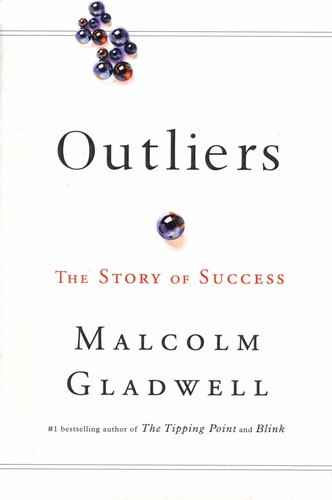
Outliers: The Story of Success
Malcolm Gladwell (2008)
“The book that shattered the myth of the self-made genius by revealing that extraordinary success is less about individual talent and more about hidden advantages, cultural legacies, and the 10,000-hour rule.”
Essay Questions & Food for Thought
14questions designed to challenge assumptions and provoke original thinking. These can't be answered from a summary — you need the actual text.
The Canadian hockey birth-date data shows that elite players are disproportionately born in the first three months of the year. What specific policy changes could hockey (or education, or other youth development systems) implement to reduce this bias? Why haven't they been implemented?
The 10,000-hour rule has been challenged by researchers who argue that Gladwell oversimplified the original research. What specific criticisms have been raised, and how do they affect the broader argument about practice, opportunity, and mastery?
Gladwell argues that Bill Gates's success depended on being born at exactly the right time and having unusual access to computing resources. Apply this 'timing and access' analysis to a contemporary technology figure (Mark Zuckerberg, Elon Musk, Jensen Huang). What structural advantages were necessary for their success?
Gladwell distinguishes between 'concerted cultivation' (middle-class parenting that develops institutional navigation skills) and 'natural growth' (working-class parenting that provides love but not institutional preparation). Is this distinction useful or does it oversimplify class differences in parenting?
The Korean Air chapter argues that national culture (Power Distance) caused cockpit communication failures. Is this cultural determinism? Can individual behavior be attributed to national culture without stereotyping? How should we think about the relationship between culture and individual agency?
Gladwell argues that Asian mathematical superiority is cultural (rooted in rice-paddy work ethic) rather than genetic. What evidence supports this claim? What evidence would weaken it? How would you design a study to test the hypothesis?
The Matthew Effect — initial advantages compounding over time — is visible in education, sports, and career paths. Identify a specific Matthew Effect in your own experience or observation. What was the initial advantage, and how did it compound?
Compare Gladwell's structural explanation of success with the 'growth mindset' framework (Carol Dweck). Does believing that effort produces results (growth mindset) help if structural opportunities are absent? How do individual beliefs and structural conditions interact?
Gladwell ends with his own family history, showing that his success as a writer depended on specific structural advantages in Jamaica, England, and Canada. Is this self-analysis convincing? Does applying the thesis to himself strengthen or weaken the argument?
If Gladwell's argument is correct — that success depends on structural factors as much as individual merit — what are the implications for how we design education systems, distribute resources, and evaluate individual achievement?
Gladwell's narrative method — selecting vivid examples that support his thesis — has been criticized for cherry-picking evidence. How would you evaluate whether his examples are representative or exceptional? What evidence would you need to verify his claims?
Compare Outliers' explanation of success with Rich Dad Poor Dad's explanation. Kiyosaki emphasizes mindset and financial education; Gladwell emphasizes structural opportunity and cultural legacy. Which is more accurate? Can both be true?
Gladwell wrote Outliers in 2008, before social media transformed opportunity structures. How has social media changed the dynamics of the Matthew Effect, the 10,000-hour rule, and access to practice opportunities?
The 'practical intelligence' concept — knowing how to navigate institutions, communicate with authority figures, and work systems — is learned from family rather than school. What are the implications for first-generation college students who may lack this cultural knowledge?