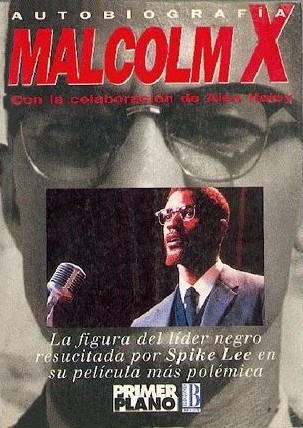
The Autobiography of Malcolm X
Malcolm X and Alex Haley (1965)
“The most radical act of self-invention in American literature — a man who remade himself four times and was killed before he could finish the fifth.”
The Autobiography of Malcolm X— Summary & Analysis
by Malcolm X and Alex Haley · published 1965 · 466 pages · Contemporary / Civil Rights Era
A user-friendly study guide for The Autobiography of Malcolm X by Malcolm X and Alex Haley (1965): a high-level plot summary, full chapter-by-chapter analysis, theme breakdowns, character profiles, and 30 essay questions designed for high-school, ap-english, college readers. Unlike a stock summary, sumsumsum.com adds a diction analysis drawn from Malcolm X and Alex Haley’s actual text, the 8 documented AP Literature exam appearances of this book, and reading-difficulty guidance (Easy, 3/10) so students, teachers, and lifelong readers know what they are walking into.
“The most radical act of self-invention in American literature — a man who remade himself four times and was killed before he could finish the fifth.”
Short Summary
Malcolm Little is born into a family targeted by white supremacists, loses his father to probable murder, watches his mother's mental breakdown, and lands in foster care. He moves to Boston and Harlem, becomes a hustler and drug dealer, and is sentenced to ten years in prison for burglary. In prison he discovers the Nation of Islam and reinvents himself as Malcolm X — the most electrifying Black voice in America. He rises to national prominence as the NOI's chief spokesman, then breaks with Elijah Muhammad after learning of his mentor's hypocrisy. A pilgrimage to Mecca transforms his understanding of race. He returns to found a new movement, and is assassinated before the autobiography is published.
Detailed Summary
Malcolm Little is born in Omaha, Nebraska in 1925 to Earl and Louise Little. His father, a Baptist preacher and Garveyite activist, is repeatedly threatened by the Ku Klux Klan and the Black Legion. The family moves to Lansing, Michigan, where their home is burned down. When Malcolm is six, Earl Lit...
Summary in the Author’s Writing Style
A retelling of The Autobiography of Malcolm X in Malcolm X and Alex Haley’s style — so you can hear the language, not just the plot. This is a stylistic pastiche written by sumsumsum, not an excerpt from the book.
When the men in hoods rode up to our house in Omaha, my mother was carrying me. I was not born yet, but I count that night as the first thing that happened to me, because everything that happened to me afterward was the same thing wearing a different face. My father was a preacher and a Garvey man, …
Chapter-by-Chapter Analysis
If you liked The Autobiography of Malcolm X, read next
Start with Narrative of the Life of Frederick Douglass by Frederick Douglass — The foundational Black American autobiography of self-liberation — Malcolm's is its twentieth-century counterpart, separated by a century of legal freedom and structural oppression. Then try The Fire Next Time by James Baldwin — Baldwin and Malcolm debated directly — same diagnosis (white supremacy), different prescriptions (love versus separation). Reading them together is reading the central argument of the civil rights era. Or pivot to The Souls of Black Folk by W.E.B. Du Bois — Du Bois's 'double consciousness' theory provides the intellectual framework for what Malcolm lived — the autobiography is Du Bois's thesis made flesh over fifty years.
For comparative essays, pair The Autobiography of Malcolm X with
The strongest comparative pairing is Black Boy (Richard Wright) — Another Black Midwestern childhood autobiography — Wright's hunger and Malcolm's are the same hunger, the same institutional failure, with radically different destinations. For a third angle, contrast with Between the World and Me (Ta-Nehisi Coates) — Coates's 2015 letter to his son is the autobiography's direct descendant — same structural analysis, updated for the era of mass incarceration and police violence.
Each of these pairings opens a clean thesis path on shared themes, period diction, or formal influence — useful for AP Lit / IB / first-year college comparative essays.