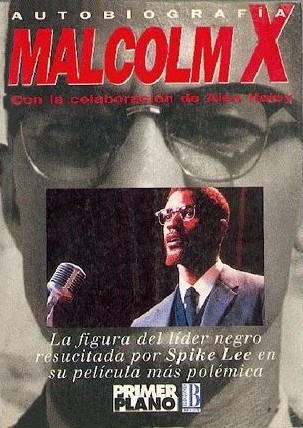
The Autobiography of Malcolm X
Malcolm X and Alex Haley (1965)
“The most radical act of self-invention in American literature — a man who remade himself four times and was killed before he could finish the fifth.”
For Students
Because it is the most honest account of what it means to reinvent yourself, written by someone who did it not once but four times — and who knew each transformation was necessary because the previous version of himself could not survive. The autobiography answers the questions school rarely asks: Why do people turn to the street? What does prison actually do? What happens when a belief system you've organized your life around turns out to be built on a lie? These are not Malcolm's questions alone.
For Teachers
The autobiography sustains analysis at every level — the rhetoric of the oratorical sections, the diction shifts across Malcolm's three identities, the questions of collaborative authorship and narrative reliability, the relationship between personal history and political ideology. It pairs productively with King's 'Letter from Birmingham Jail' (contrasting methods, common goals), with Narrative of the Slave by Frederick Douglass (the long tradition of Black self-liberation autobiography), and with James Baldwin's The Fire Next Time (a contemporary who agreed with Malcolm's diagnosis and disagreed on the cure).
Why It Still Matters
Every system that tells a child what is 'realistic for someone like you' is Mr. Ostrowski. Every institution that offers people who have been failed by education a framework that explains their failure — from cults to gangs to political movements — is doing what the Nation of Islam did for Malcolm. And the capacity to revise what you believe when the evidence changes — to be the person who stood in Mecca and said 'I was wrong, and here is why' — that is the rarest and most necessary human capacity. Malcolm demonstrates it at the cost of his life.