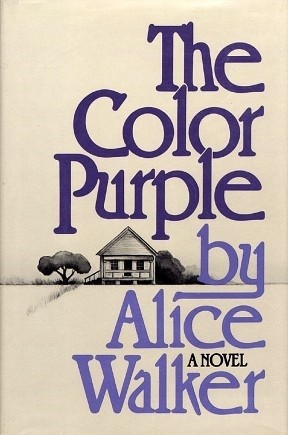
The Color Purple
Alice Walker (1982)
“A Black woman in the Jim Crow South finds her voice, her God, and herself through letters no one was ever supposed to read.”
This page prints on a single page. Use Ctrl+P / Cmd+P.
The Color Purple
Alice Walker (1982) · 295pages · Contemporary / Civil Rights Aftermath · 9 AP appearances
Summary
Celie, a poor Black girl in rural Georgia, is raped by the man she believes is her father, loses her two children, and is handed off as a wife to an abusive man she calls 'Mister.' Over thirty years, through letters to God and then to her sister Nettie — who has been in Africa as a missionary — Celie transforms from a girl taught to be invisible into a woman who owns her own business, finds love on her own terms, and reclaims every person stolen from her. The letters are the survival, and finally, the triumph.
Why It Matters
Won the Pulitzer Prize for Fiction and the National Book Award in 1983, making Walker the first Black woman to win the Pulitzer in fiction. Subsequently became one of the most taught novels in American high schools and colleges. Also became one of the most challenged and banned books in American ...
Themes & Motifs
Diction & Style
Register: Dual register — Celie's AAVE epistolary prose (phonetic, direct, present-tense) alongside Nettie's standard educated English. Walker refuses to subordinate either register to the other.
Narrator: Celie: intimate, direct, addressed to God then to Nettie. The epistolary form means every letter is already an act of...
Figurative Language: Moderate in Celie's early letters, increasing as her voice develops. Walker's figurative language is grounded in the natural world and the body
Historical Context
Rural Georgia and Africa, approximately 1910–1940; written and published 1982: The novel is set in a period when the legal, economic, and social subordination of Black women in the rural South was absolute and documented. Celie's powerlessness is not metaphor — it is historic...
Key Characters
Talking Points
- Walker writes Celie's letters entirely in AAVE (African American Vernacular English) — dropping copulas, using phonetic spelling, double negatives as intensifiers. Why is this a political as well as a literary decision? What would be lost if Celie's letters were written in standard English?
- Celie addresses her first letters to God because 'You better not never tell nobody but God.' By the end, she addresses 'Dear God. Dear stars, dear trees, dear sky, dear peoples. Dear Everything.' How has her conception of God changed — and what does this change say about her transformation?
- Shug Avery's first words to Celie are 'You sure is ugly.' By the end of the novel, Shug has called Celie beautiful, written her a song, and been the central agent of her liberation. Is Shug's initial cruelty inconsistent — or does it tell us something about how Shug tests people?
- The novel uses two distinct prose registers: Celie's AAVE letters and Nettie's standard English letters. Walker refuses to privilege one over the other. What does this structural choice argue about language, education, and what it means to be 'articulate'?
- Sofia hits the mayor back and goes to prison for twelve years. Celie absorbs violence for decades and is never imprisoned. What does Walker say about the different costs of resistance versus compliance for Black women in the Jim Crow South?
Notable Quotes
“You better not never tell nobody but God. It'd kill your mammy.”
“I am fourteen years old. I am I have always been a good girl.”
“She look like she ain't scared of nothing.”
Why Read This
Because Celie starts with no language and ends with a voice — and watching that transformation happen sentence by sentence in the prose is one of the most viscerally satisfying experiences in American literature. Because the novel proves that dial...