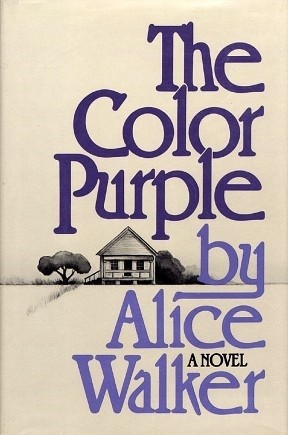
The Color Purple
Alice Walker (1982)
“A Black woman in the Jim Crow South finds her voice, her God, and herself through letters no one was ever supposed to read.”
The Color Purple— Historical Context & Author Background
Author: Alice Walker · Published 1982· Era: Contemporary / Civil Rights Aftermath·295 pages
Themes explored: gender, race, identity, resilience, spirituality, voice, family, transformation
About Alice Walker
Alice Walker was born in 1944 in Eatonton, Georgia — the eighth child of sharecroppers — in a world not far removed from the Georgia of the novel. At eight, a BB gun accident blinded her right eye; the resulting scar tissue, and the self-consciousness it caused, fed directly into Celie's sense of ugliness. Walker attended Spelman College and Sarah Lawrence, worked in the Civil Rights Movement in Mississippi, married a white civil rights lawyer and later described the social hostility they faced. She was the first Black woman to win the Pulitzer Prize for Fiction, for The Color Purple in 1983. Her relationship with Zora Neale Hurston is formative: Walker found Hurston's unmarked grave in Florida, paid for a headstone, and spent years championing the rediscovery of Their Eyes Were Watching God — a novel Walker openly acknowledged as the spiritual predecessor of The Color Purple. Walker's own sexuality (she later identified as bisexual) inflects the Celie-Shug relationship, which Walker has described as drawn from real emotional experience.
Life → Text Connections
How Alice Walker's real experiences shaped specific elements of The Color Purple.
Walker grew up in rural Georgia as a sharecropper's daughter, knowing the exact texture of the poverty and racial hierarchy Celie navigates
Celie's domestic world — the farming, the poverty, the specific indignities of Jim Crow — has the precision of lived observation, not research
Walker is not writing from outside the experience. The authority of the novel's domestic detail comes from biography. This is not poverty rendered picturesque for an outside reader.
Walker's deep engagement with Zora Neale Hurston — recovering Hurston's grave, championing Their Eyes Were Watching God — was a direct creative influence
The use of AAVE as a full literary medium, the centering of Black Southern women's interiority, the refusal to translate the vernacular for a mainstream audience
The Color Purple is in conscious literary conversation with Hurston. Walker acknowledged this explicitly. Understanding the Hurston lineage explains why Walker's linguistic choices were politically as well as aesthetically motivated.
Walker's Civil Rights work in Mississippi, her interracial marriage, and her experience of both racial and gender discrimination
The novel's simultaneous engagement with racism and sexism — refusing to rank them, showing how they compound — reflects Walker's own political formation
The term 'womanist' — which Walker coined — describes a Black feminist politics that sees race and gender as inseparable. The Color Purple is its fictional embodiment.
Walker's eye injury at eight caused a scar that made her feel ugly and invisible during childhood
Celie's sense of ugliness — the belief that she is invisible, undesirable, not worth looking at — and the transformation when Shug actually sees her
The emotional stakes of being seen are biographical. Walker knew, from childhood, what invisibility felt like — and knew how much a single moment of being truly seen could change.
Historical Era
Rural Georgia and Africa, approximately 1910–1940; written and published 1982
How the Era Shapes the Book
The novel is set in a period when the legal, economic, and social subordination of Black women in the rural South was absolute and documented. Celie's powerlessness is not metaphor — it is historical fact. The violence Alphonso and Mister enact was legally invisible. Walker sets the novel in this historical moment precisely to illuminate the ordinary, unremarkable nature of that violence. The African sections place American racism within a global colonial framework: the forces destroying the Olinka are the same forces that built the economic structure within which Alphonso can own Celie.
Why The Color Purple Matters Historically
Won the Pulitzer Prize for Fiction and the National Book Award in 1983, making Walker the first Black woman to win the Pulitzer in fiction. Subsequently became one of the most taught novels in American high schools and colleges. Also became one of the most challenged and banned books in American school districts — consistently in the top ten of ALA's banned books list. The 1985 Steven Spielberg film adaptation made it globally known. The novel has been credited with helping create the vocabulary for 'womanism' as a distinct political and critical framework.
- First novel by a Black woman to win the Pulitzer Prize for Fiction
- One of the first major American novels to center an explicitly Black lesbian relationship as a vehicle for a protagonist's liberation
- Pioneered the use of AAVE as an uncompromised literary medium in a novel aimed at a mainstream literary audience
- Coined (in its preface) the term 'womanist' to describe a Black feminist politics — a term now used in academic and activist discourse worldwide
Perennially one of the most challenged books in American public schools. Challenged for sexual content (the Celie-Shug relationship), for 'vulgar' language (Celie's dialect), for 'negative portrayals of the Black male community,' and for 'troubling religious views' (Shug's theology). Some challenges argue the book is anti-Christian; others argue it is anti-Black men. Walker herself has noted the irony: the book is challenged for depicting the same oppression that would have made Celie unable to read it.