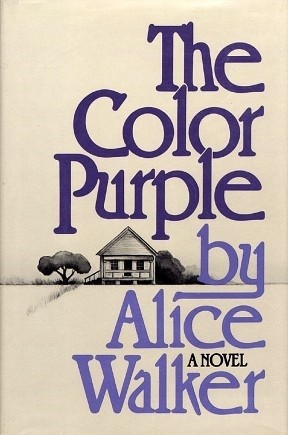
The Color Purple
Alice Walker (1982)
“A Black woman in the Jim Crow South finds her voice, her God, and herself through letters no one was ever supposed to read.”
The Color Purple— Summary & Analysis
by Alice Walker · published 1982 · 295 pages · Contemporary / Civil Rights Aftermath
A user-friendly study guide for The Color Purple by Alice Walker (1982): a high-level plot summary, full chapter-by-chapter analysis, theme breakdowns, character profiles, and 30 essay questions designed for high-school, ap-english, college readers. Unlike a stock summary, sumsumsum.com adds a diction analysis drawn from Alice Walker’s actual text, the 9 documented AP Literature exam appearances of this book, and reading-difficulty guidance (Easy, 3/10) so students, teachers, and lifelong readers know what they are walking into.
“A Black woman in the Jim Crow South finds her voice, her God, and herself through letters no one was ever supposed to read.”
Short Summary
Celie, a poor Black girl in rural Georgia, is raped by the man she believes is her father, loses her two children, and is handed off as a wife to an abusive man she calls 'Mister.' Over thirty years, through letters to God and then to her sister Nettie — who has been in Africa as a missionary — Celie transforms from a girl taught to be invisible into a woman who owns her own business, finds love on her own terms, and reclaims every person stolen from her. The letters are the survival, and finally, the triumph.
Detailed Summary
Celie Harris is fourteen years old when she writes her first letter. She writes to God because she has been told there is nobody else — her stepfather Alphonso (whom she believes is her biological father) has raped her twice, she has given birth to two children who have been taken away, and she has ...
Summary in the Author’s Writing Style
A retelling of The Color Purple in Alice Walker’s style — so you can hear the language, not just the plot. This is a stylistic pastiche written by sumsumsum, not an excerpt from the book.
Dear God. I am fourteen and I do not have nobody else to tell. Pa come at me when Mama sick and after that he come again, and the babies he made got took off somewhere I cannot follow. He say I better not never tell nobody but You. So You is who I write. I write cause if I stop writing I do not know…
Chapter-by-Chapter Analysis
If you liked The Color Purple, read next
Start with The Joy Luck Club by Amy Tan — Epistolary and multi-generational structure, centering women's experiences across time and distance — Tan's Chinese American mothers and daughters rhyme structurally with Celie and Nettie's separated correspondence.
For comparative essays, pair The Color Purple with
The strongest comparative pairing is Their Eyes Were Watching God (Zora Neale Hurston) — Walker's direct literary predecessor — AAVE as uncompromised literary medium, Black Southern women's interiority, the novel Walker championed and then answered with her own. Another productive pairing is Beloved (Toni Morrison) — Adjacent terrain — Black women, the American South, generational trauma — but Morrison's prose is maximally dense where Walker's is maximally direct; useful contrast in how two writers address related material. For a third angle, contrast with Invisible Man (Ralph Ellison) — Both novels center the experience of being rendered invisible by American society, but Ellison's narrator seeks visibility in the public sphere while Celie's liberation is intimate, domestic, and inward.
Each of these pairings opens a clean thesis path on shared themes, period diction, or formal influence — useful for AP Lit / IB / first-year college comparative essays.