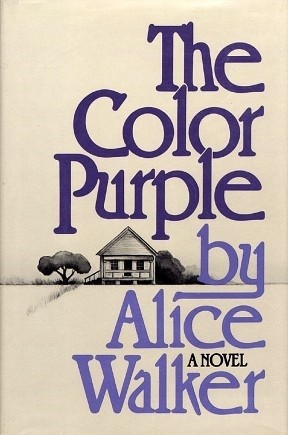
The Color Purple
Alice Walker (1982)
“A Black woman in the Jim Crow South finds her voice, her God, and herself through letters no one was ever supposed to read.”
Why This Book Matters
Won the Pulitzer Prize for Fiction and the National Book Award in 1983, making Walker the first Black woman to win the Pulitzer in fiction. Subsequently became one of the most taught novels in American high schools and colleges. Also became one of the most challenged and banned books in American school districts — consistently in the top ten of ALA's banned books list. The 1985 Steven Spielberg film adaptation made it globally known. The novel has been credited with helping create the vocabulary for 'womanism' as a distinct political and critical framework.
Firsts & Innovations
First novel by a Black woman to win the Pulitzer Prize for Fiction
One of the first major American novels to center an explicitly Black lesbian relationship as a vehicle for a protagonist's liberation
Pioneered the use of AAVE as an uncompromised literary medium in a novel aimed at a mainstream literary audience
Coined (in its preface) the term 'womanist' to describe a Black feminist politics — a term now used in academic and activist discourse worldwide
Cultural Impact
Consistently among the most banned books in American schools — challenged for sexual content, language, and 'negative portrayals of men'
The 1985 Spielberg film earned 11 Academy Award nominations (and won none, a controversy still discussed)
Broadway musical adaptation (2005, revived 2015 and 2023) — Tony Award winner
Credited with reviving scholarly and popular interest in Zora Neale Hurston's work
The term 'womanist' (from Walker's preface) entered academic discourse and is now a recognized framework in feminist theory
Taught in conjunction with Their Eyes Were Watching God as the foundation of an AAVE literary tradition
Banned & Challenged
Perennially one of the most challenged books in American public schools. Challenged for sexual content (the Celie-Shug relationship), for 'vulgar' language (Celie's dialect), for 'negative portrayals of the Black male community,' and for 'troubling religious views' (Shug's theology). Some challenges argue the book is anti-Christian; others argue it is anti-Black men. Walker herself has noted the irony: the book is challenged for depicting the same oppression that would have made Celie unable to read it.