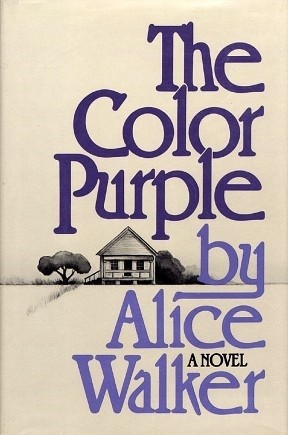
The Color Purple
Alice Walker (1982)
“A Black woman in the Jim Crow South finds her voice, her God, and herself through letters no one was ever supposed to read.”
For Students
Because Celie starts with no language and ends with a voice — and watching that transformation happen sentence by sentence in the prose is one of the most viscerally satisfying experiences in American literature. Because the novel proves that dialect is not a deficiency. Because it is one of the few canonical texts in which a Black woman's interior life is the entire world of the book. And because the Shug theology section will give you a better framework for thinking about spirituality than most philosophy courses.
For Teachers
The dual-register structure (Celie vs. Nettie) makes it ideal for comparative prose analysis. The epistolary form raises questions about audience and voice that repay sustained discussion. The theological argument is one of the most teachable in fiction — concrete, character-grounded, accessible at multiple levels. And the banning history makes it impossible to teach without confronting the question of why certain stories are deemed dangerous.
Why It Still Matters
The novel's central question — what does it cost to make yourself invisible, and what does it take to come back? — is not historically specific. The specific violence is of the Jim Crow South; the experience of learning that your feelings, your body, and your voice are not yours is not. The novel's argument — that survival is not enough, that the self must be recovered, that the recovery happens through voice and community and creative work — is the argument of every therapy session, every support group, every creative writing class. Walker just gets there in 295 pages of extraordinary prose.