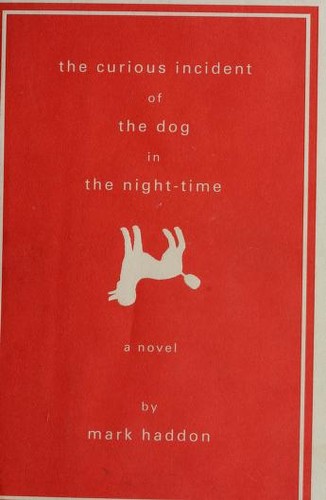
The Curious Incident of the Dog in the Night-Time
Mark Haddon (2003)
“A murder mystery told by a narrator who cannot lie, cannot understand metaphor, and cannot leave his street — until he does.”
Why This Book Matters
Curious Incident is one of the most widely read novels in British and American secondary education. It won the Whitbread Novel Award and Whitbread Book of the Year in 2003. It was adapted into a West End and Broadway stage production (2012) that won seven Olivier Awards and five Tony Awards. It forced the mainstream literary novel to take the autistic or neurodivergent perspective seriously as a narrative form rather than a subject — Christopher is not a character who has autism; he is a narrator whose cognitive architecture is the novel's form.
Firsts & Innovations
First mainstream literary novel to use a neurodivergent narrator as the formal basis of the prose style, not merely its subject
First novel to embed actual A-level Mathematics examination questions as narrative content
One of the first dual-audience novels (simultaneous adult and YA publication) to be taken equally seriously in both markets
Cultural Impact
Adapted into a BAFTA-winning BBC television film and a multiple-award-winning stage play
Required reading in the majority of UK secondary schools and widely taught in the US
Changed the representation of autistic and neurodivergent characters in popular fiction — post-Curious Incident, the 'savant' trope became a conscious reference point rather than an invisible default
Sparked ongoing debate about the ethics of neurotypical authors writing neurodivergent characters
Introduced the Monty Hall problem to millions of readers who had never encountered it
Banned & Challenged
Challenged in some American school districts for language (Christopher swears periodically, the incidents involving police contain mild profanity) and for family content (parental infidelity, parental deception). Some autistic advocacy groups have criticized its classroom use as potentially misleading about autistic experience.