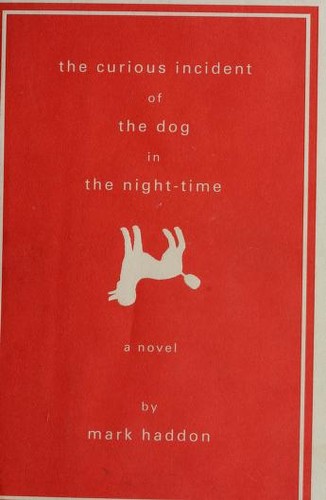
The Curious Incident of the Dog in the Night-Time
Mark Haddon (2003)
“A murder mystery told by a narrator who cannot lie, cannot understand metaphor, and cannot leave his street — until he does.”
Similar Books
Thematic connections across eras and genres — books that talk to each other.
The Catcher in the Rye
J.D. Salinger
Another teenage narrator who refuses social convention — but where Holden performs contempt as rebellion, Christopher reports facts as cognitive reality
To Kill a Mockingbird
Harper Lee
Both novels use a child narrator whose limited perspective forces the reader to supply the emotional and ethical context the narrator cannot — both are formally about the gap between what is seen and what is understood
Room
Emma Donoghue
Another novel narrated by a character whose cognitive and experiential limitations create a formally distinctive voice — in both, the narrators' innocence is a structural tool, not a limitation
The Solitude of Prime Numbers
Paolo Giordano
Explicitly in dialogue with Haddon's use of mathematics as emotional metaphor — prime numbers as isolation, the beautiful loneliness of numbers that cannot be divided
Flowers for Algernon
Daniel Keyes
Both novels use a non-neurotypical narrator whose way of processing the world is the novel's formal mechanism — and both ask what intelligence is and what it costs
The Perks of Being a Wallflower
Stephen Chbosky
Contemporary coming-of-age narrators who process the world differently — both became touchstone texts for young readers who feel outside normative experience