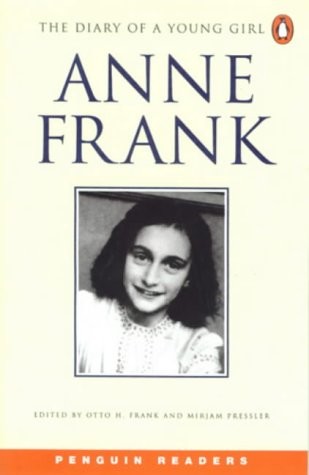
The Diary of a Young Girl
Anne Frank (1947)
“A thirteen-year-old girl hiding from the Nazis wrote the most read diary in human history — and never knew it.”
This page prints on a single page. Use Ctrl+P / Cmd+P.
The Diary of a Young Girl
Anne Frank (1947) · 283pages · Contemporary / WWII · 3 AP appearances
Summary
Between June 1942 and August 1944, Anne Frank — a Jewish teenager in Nazi-occupied Amsterdam — kept a diary while hiding with her family and four others in a concealed apartment above her father's office building, which she called the Secret Annex. She wrote with wit, fury, heartbreak, and a literary self-awareness astonishing for her age. On August 4, 1944, the Nazis raided the Annex. Anne was deported to Bergen-Belsen concentration camp, where she died of typhus in February or March 1945, three months before the war ended. She was fifteen. Her father Otto, the only Annex survivor, published her diary in 1947.
Why It Matters
Het Achterhuis was published in a print run of 1,500 copies in 1947. It has since sold more than 35 million copies and been translated into more than 70 languages — making it one of the most widely read books in human history. It is the most direct, intimate, and widely distributed account of wha...
Themes & Motifs
Diction & Style
Register: Informal in the early entries — chatty, quick, unguarded. Progressively more formal and philosophically deliberate as the diary continues. The final entries read as conscious literary prose.
Narrator: Anne Frank is both narrator and subject, both the person writing and the person being examined. She maintains a pecul...
Figurative Language: Moderate and growing. The early entries are nearly figurative-free
Historical Context
World War II, Nazi occupation of the Netherlands (1940-1945): The diary is the Holocaust's most intimate document — one consciousness, in real time, experiencing Nazi persecution not as history but as daily life. The progressive narrowing of Jewish freedom be...
Key Characters
Talking Points
- Anne addresses all her diary entries to 'Kitty,' an imaginary friend. Why does she use this device rather than writing a conventional diary? What does addressing a specific person — even an invented one — change about the writing?
- Anne describes two versions of herself: the cheerful, sarcastic, social outer Anne and the 'much better, deeper and purer' inner Anne. Do you believe this distinction? Is the outer Anne really a performance, or is she also genuinely Anne?
- Otto Frank edited the diary before publication, removing passages about Anne's sexuality and her harshest criticism of her mother. Was he right to do so? What does editing a dead person's words mean — for the diary, for the reader, and for Anne?
- Anne's most famous line — 'despite everything, I believe that people are really good at heart' — is often quoted without the word 'despite.' Why does that word matter so much? What is the 'everything' she is writing against?
- Anne writes that she wants to go on living after her death, and that she hopes the diary will make her famous. She achieved exactly this — at a cost she couldn't imagine. Does knowing her fate change how you read her ambition?
Notable Quotes
“I want to write, but more than that, I want to bring out all kinds of things that lie buried deep in my heart.”
“I don't want to set down a series of bald facts in a diary as most people do, but I want this diary itself to be my friend.”
“Margot was very quiet and serious... We couldn't talk. I felt it was hopeless.”
Why Read This
Because Anne Frank is not a symbol — she is a person. Fourteen years old, funny, annoying, vain, brilliant, sometimes unfair, often right. Reading the diary carefully means reading someone who is becoming themselves in real time, under conditions ...