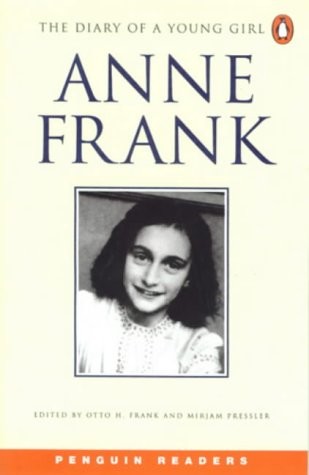
The Diary of a Young Girl
Anne Frank (1947)
“A thirteen-year-old girl hiding from the Nazis wrote the most read diary in human history — and never knew it.”
The Diary of a Young Girl— Summary & Analysis
by Anne Frank · published 1947 · 283 pages · Contemporary / WWII
A user-friendly study guide for The Diary of a Young Girl by Anne Frank (1947): a high-level plot summary, full chapter-by-chapter analysis, theme breakdowns, character profiles, and 30 essay questions designed for middle-school, high-school readers. Unlike a stock summary, sumsumsum.com adds a diction analysis drawn from Anne Frank’s actual text, the 3 documented AP Literature exam appearances of this book, and reading-difficulty guidance (Easy, 1/10) so students, teachers, and lifelong readers know what they are walking into.
“A thirteen-year-old girl hiding from the Nazis wrote the most read diary in human history — and never knew it.”
Short Summary
Between June 1942 and August 1944, Anne Frank — a Jewish teenager in Nazi-occupied Amsterdam — kept a diary while hiding with her family and four others in a concealed apartment above her father's office building, which she called the Secret Annex. She wrote with wit, fury, heartbreak, and a literary self-awareness astonishing for her age. On August 4, 1944, the Nazis raided the Annex. Anne was deported to Bergen-Belsen concentration camp, where she died of typhus in February or March 1945, three months before the war ended. She was fifteen. Her father Otto, the only Annex survivor, published her diary in 1947.
Detailed Summary
On her thirteenth birthday, June 12, 1942, Anne Frank receives a red-and-white checkered diary she has chosen herself. She begins writing immediately, addressing her entries to an imaginary friend named Kitty — a literary device that transforms private record-keeping into something closer to an epis...
Summary in the Author’s Writing Style
A retelling of The Diary of a Young Girl in Anne Frank’s style — so you can hear the language, not just the plot. This is a stylistic pastiche written by sumsumsum, not an excerpt from the book.
Dear Kitty, I'll begin with the diary itself, because it began with me — a red-and-white checkered book chosen on my thirteenth birthday, and I confess I felt at once that you and I would tell each other everything. I have no real friend, you see, not the kind one means. Mummy and Margot and the gi…
Chapter-by-Chapter Analysis
If you liked The Diary of a Young Girl, read next
Start with The Hiding Place by Corrie ten Boom — A Dutch Christian who hid Jewish families during the occupation — the perspective of the helpers, telling the same story from the outside.. Then try Number the Stars by Lois Lowry — A fictional account of Danish Jews during WWII, written for middle school readers — often paired with Anne Frank in curricula as an accessible entry into Holocaust literature.. Or pivot to The Boy in the Striped Pajamas by John Boyne — A fictional Holocaust narrative from a child's perspective — frequently read alongside Anne Frank, though it takes a very different and more controversial approach to the material..
For comparative essays, pair The Diary of a Young Girl with
The strongest comparative pairing is Night (Elie Wiesel) — The other foundational Holocaust witness text — written in retrospect by a survivor, stripping language to its barest minimum where Anne's expands and philosophizes. Read together, they define the genre's range.. Another productive pairing is Maus (Art Spiegelman) — A son interviews his Holocaust-survivor father and turns it into a graphic novel. Where Anne's diary is primary witness, Maus examines what survives in memory and what it costs the next generation.. For a third angle, contrast with The Complete Persepolis (Marjane Satrapi) — A coming-of-age memoir under political oppression (the Iranian Revolution) with the same wry self-awareness and same dual consciousness — the child surviving history while also just trying to be a person..
Each of these pairings opens a clean thesis path on shared themes, period diction, or formal influence — useful for AP Lit / IB / first-year college comparative essays.