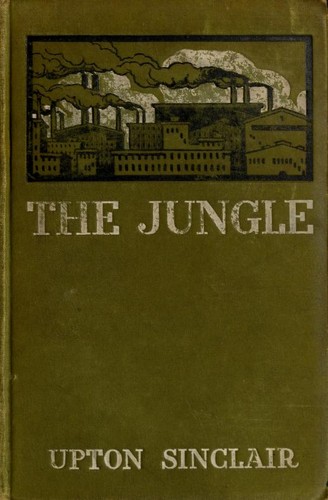
The Jungle
Upton Sinclair (1906)
“The novel that aimed at America's heart and hit its stomach — a muckraking masterpiece that changed federal law and exposed the human cost of industrial capitalism.”
At a Glance
Jurgis Rudkus, a young Lithuanian immigrant, arrives in Chicago's Packingtown with his family, believing in the American Dream. He finds work in the meatpacking plants, where the conditions are so brutal and the system so rigged that his family is systematically destroyed — through wage theft, unsafe labor, sexual exploitation, disease, and death. After losing his wife Ona, his son, his home, and his dignity, Jurgis drifts through crime and homelessness before discovering socialism at a political rally. The novel ends with Jurgis converted to the socialist cause, but the reader remembers the slaughterhouse.
Read full summary →Why This Book Matters
The Jungle is one of the rare novels that directly changed federal law. Within months of publication, Theodore Roosevelt ordered an investigation of the meatpacking industry. The resulting Neill-Reynolds Report confirmed Sinclair's findings, and Congress passed both the Pure Food and Drug Act and the Meat Inspection Act in 1906. The novel did not achieve Sinclair's goal of advancing socialism, but it created the foundation for federal food safety regulation that persists to this day. It remains the defining example of muckraking literature's capacity to translate fiction into policy.
Diction Profile
Middle register — journalistic precision in the meatpacking sections, rising to oratorical formality in the socialist chapters, dropping to stark simplicity in scenes of suffering
Moderate