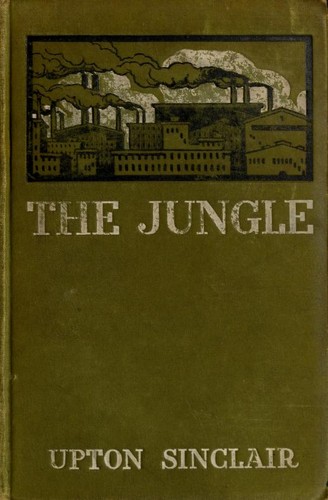
The Jungle
Upton Sinclair (1906)
“The novel that aimed at America's heart and hit its stomach — a muckraking masterpiece that changed federal law and exposed the human cost of industrial capitalism.”
Why This Book Matters
The Jungle is one of the rare novels that directly changed federal law. Within months of publication, Theodore Roosevelt ordered an investigation of the meatpacking industry. The resulting Neill-Reynolds Report confirmed Sinclair's findings, and Congress passed both the Pure Food and Drug Act and the Meat Inspection Act in 1906. The novel did not achieve Sinclair's goal of advancing socialism, but it created the foundation for federal food safety regulation that persists to this day. It remains the defining example of muckraking literature's capacity to translate fiction into policy.
Firsts & Innovations
One of the first novels to directly produce federal legislation — the Pure Food and Drug Act of 1906
Pioneered the technique of sustained literary muckraking — using fiction as investigative journalism
One of the first American novels to center immigrant experience as its primary subject
Established the template for the 'novel of social protest' that influenced Steinbeck, Wright, and others
Cultural Impact
Directly prompted the Pure Food and Drug Act (1906) and Meat Inspection Act (1906)
Sinclair's quote 'I aimed at the public's heart, and by accident I hit it in the stomach' became shorthand for the gap between artistic intention and public reception
Made 'muckraking' a permanent category of American journalism and literature
Influenced every subsequent novel of social protest — from The Grapes of Wrath to Fast Food Nation
Remains assigned reading in American high schools and college courses on Progressive Era history and literature
Inspired the modern food safety movement and consumer protection advocacy
Banned & Challenged
Challenged and banned repeatedly for graphic content — the meatpacking descriptions, sexual content (Ona's assault), and socialist politics have all provoked censorship attempts. Banned in Yugoslavia, East Germany, and South Korea at various times. Challenged in American schools for 'promoting socialism' and for graphic violence. The irony: the content that gets it banned is the content that makes it essential.