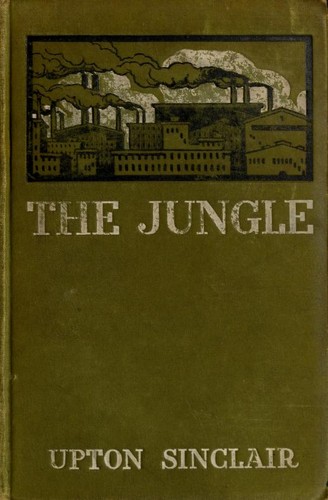
The Jungle
Upton Sinclair (1906)
“The novel that aimed at America's heart and hit its stomach — a muckraking masterpiece that changed federal law and exposed the human cost of industrial capitalism.”
For Students
Because the food you eat today is safer because of this book. The Jungle is one of the few novels that changed the law — not through argument but through description. Sinclair shows you what unregulated capitalism looks like at the level of the human body: the worker's body broken by the machine, the consumer's body poisoned by the product. If you want to understand why we have the FDA, why we have labor laws, and why the phrase 'there ought to be a law' exists — read the novel that made people say it.
For Teachers
A natural pairing with units on the Progressive Era, immigration, labor history, and naturalism as a literary mode. The meatpacking chapters are among the most vivid social realism in American literature — students respond viscerally. The socialist ending provokes genuine debate about whether literature should advocate political positions. The novel also raises important questions about racial representation (Sinclair's treatment of Black strikebreakers) that open discussions about the limits of Progressive Era reform.
Why It Still Matters
Replace meatpacking with gig economy. Replace Packingtown with any Amazon warehouse. Replace Lithuanian immigrants with undocumented workers in agricultural processing. The details change; the structure doesn't. The Jungle describes a system that converts human labor into corporate profit while externalizing every cost — injury, disease, environmental damage, family destruction — onto the workers and the public. That system is still running.