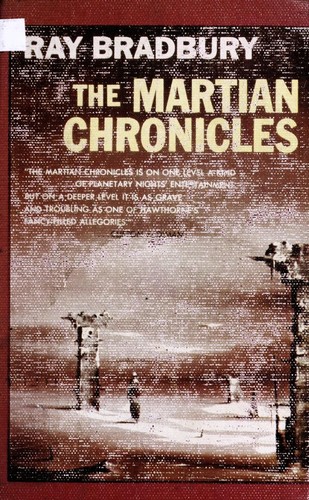
The Martian Chronicles
Ray Bradbury (1950)
“A book about Mars that is really about Earth -- written by a man who never learned to drive, distrusted machines, and saw the American frontier myth for the beautiful lie it always was.”
At a Glance
Between 1999 and 2026, humans launch expeditions to Mars, colonize it, strip it of its ancient civilization, import their petty Earth culture, then abandon it when nuclear war breaks out back home. The few who remain become the new Martians. Bradbury uses twenty-eight linked stories to replay the colonization of America -- this time on red soil, and this time with full knowledge of what colonization destroys.
Read full summary →Why This Book Matters
The Martian Chronicles proved that science fiction could be literature -- that genre fiction could address colonialism, nuclear anxiety, censorship, and the human condition with the same seriousness and beauty as any 'literary' novel. Published in 1950, it was immediately recognized as something different from the pulp SF of its era. Christopher Isherwood reviewed it as a work of art, not a genre exercise. It became the book that English teachers could assign without apologizing for the genre label, and it opened the door for science fiction to be taken seriously in academic contexts.
Diction Profile
Mid-register with frequent poetic elevation -- Midwestern plainness punctuated by passages of almost incantatory lyricism
Very high -- Bradbury is among the most metaphor-dense prose writers in English. His metaphors are typically drawn from nature and domestic life rather than from technology or abstraction: rockets bloom like flowers, cities are described as hives or cathedrals, silence has texture and weight. He almost never uses technical language, even when describing machines.