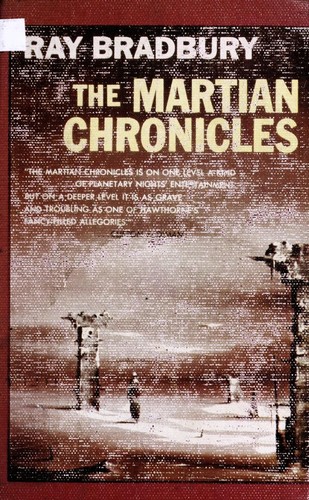
The Martian Chronicles
Ray Bradbury (1950)
“A book about Mars that is really about Earth -- written by a man who never learned to drive, distrusted machines, and saw the American frontier myth for the beautiful lie it always was.”
For Students
Because it is the most beautiful book ever written about the worst things humans do -- colonize, destroy, forget, and repeat. Each story is short enough to read in twenty minutes and dense enough to discuss for an hour. The prose will teach you more about how sentences work than any textbook, and the ideas will force you to think about what it means to arrive somewhere new and make it look like the place you left. Also: it predicted the emotional reality of the twenty-first century -- loneliness, technological dependence, the loss of physical community -- with eerie precision.
For Teachers
The fix-up structure makes it extraordinarily flexible for classroom use -- individual stories can be taught independently or as a unified sequence. 'There Will Come Soft Rains' alone supports a full week of close reading. The colonial allegory connects directly to American history curriculum. The nuclear anxiety connects to Cold War units. The diction analysis is rich: Bradbury's prose is accessible enough for high school students and sophisticated enough for graduate seminars. The book teaches close reading, historical context, and moral reasoning simultaneously.
Why It Still Matters
We are still colonizing -- gentrifying neighborhoods, extracting resources from developing nations, terraforming social media platforms into replicas of our existing biases. We are still building automated systems that continue running after their purpose has been forgotten. We are still looking at alien landscapes and seeing only our own reflections. Bradbury's Mars is every place humans have arrived and failed to see clearly. The book is seventy-five years old and describes tomorrow.