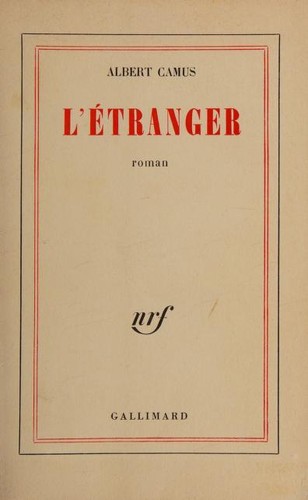
The Stranger
Albert Camus (1942)
“A man kills someone he barely knows, feels nothing, and goes to the guillotine refusing to pretend otherwise — and somehow becomes the most honest person in the room.”
The Stranger— Summary & Analysis
by Albert Camus · published 1942 · 123 pages · Modernist / Absurdist
A user-friendly study guide for The Stranger by Albert Camus (1942): a high-level plot summary, full chapter-by-chapter analysis, theme breakdowns, character profiles, and 30 essay questions designed for high-school, ap-english, college, ib readers. Unlike a stock summary, sumsumsum.com adds a diction analysis drawn from Albert Camus’s actual text, the 14 documented AP Literature exam appearances of this book, and reading-difficulty guidance (Easy, 3/10) so students, teachers, and lifelong readers know what they are walking into.
“A man kills someone he barely knows, feels nothing, and goes to the guillotine refusing to pretend otherwise — and somehow becomes the most honest person in the room.”
Short Summary
Meursault, a French Algerian clerk, learns his mother has died. He attends her funeral without weeping, begins a relationship with Marie, befriends his neighbor Raymond, and — in a moment of sun-induced stupor on a beach — shoots an unnamed Arab man four times. At trial, the prosecution focuses not on the shooting but on Meursault's failure to cry at his mother's funeral. He is convicted and sentenced to death. In his prison cell awaiting execution, Meursault rejects the prison chaplain, accepts that life is meaningless, and finds a strange peace in the indifferent universe.
Detailed Summary
Part One opens with one of the most famous sentences in world literature: 'Mother died today. Or maybe yesterday, I don't know.' Meursault, a low-level clerk in Algiers, travels to his mother's nursing home in Marengo for her funeral. He drinks coffee, smokes cigarettes, and doesn't weep. The next d...
Summary in the Author’s Writing Style
A retelling of The Stranger in Albert Camus’s style — so you can hear the language, not just the plot. This is a stylistic pastiche written by sumsumsum, not an excerpt from the book.
Mother died today. Or it was yesterday. The telegram did not say, and I did not ask. I took the bus to Marengo. The home was two kilometers from the village. I drank coffee by the coffin. I smoked a cigarette and then I was sorry, but only a little. The old people sat and looked at me. One of them w…
Chapter-by-Chapter Analysis
If you liked The Stranger, read next
Start with The Meursault Investigation by Kamel Daoud — The definitive response novel — names the murdered Arab 'Musa,' retells the story from his brother's perspective, and indicts The Stranger for its colonial silence. Then try The Great Gatsby by F. Scott Fitzgerald — Both are short, structurally precise modernist novels in which the narrator's relationship to truth is the deepest subject — Meursault cannot lie, Nick cannot stop. Or pivot to Crime and Punishment by Fyodor Dostoevsky — The deliberate structural opposite — Raskolnikov is tormented by guilt, confesses, seeks redemption. Meursault feels none of this. The comparison defines what Camus was rejecting..
For comparative essays, pair The Stranger with
The strongest comparative pairing is The Trial (Franz Kafka) — Both feature protagonists destroyed by legal systems that never fully reveal their true charges — Josef K. and Meursault are both on trial for their existence, not their actions. For a third angle, contrast with Nausea (Jean-Paul Sartre) — The companion text to The Stranger in postwar European philosophy — both protagonists experience radical alienation from meaning, but Roquentin is more articulate about his condition.
Each of these pairings opens a clean thesis path on shared themes, period diction, or formal influence — useful for AP Lit / IB / first-year college comparative essays.
More from Albert Camus and the scholars who study Camus
Other works by Albert Camus: The Plague (1947, 308 pages). Reading two or three of these in sequence reveals Albert Camus’s recurring obsessions and stylistic signatures more clearly than any single book can.
The standard scholarly entry points to Albert Camus’s work: Olivier Todd (French biographer) — Albert Camus: A Life (1996); Robert Zaretsky (University of Houston, Honors College) — A Life Worth Living: Albert Camus and the Quest for Meaning (2013). These are the works graduate seminars cite when teaching Albert Camus.