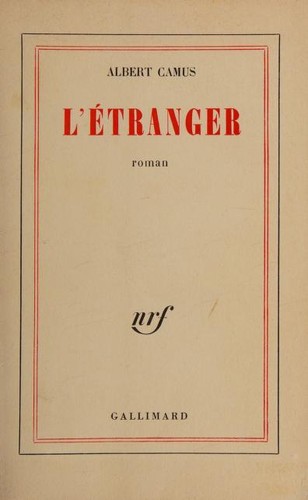
The Stranger
Albert Camus (1942)
“A man kills someone he barely knows, feels nothing, and goes to the guillotine refusing to pretend otherwise — and somehow becomes the most honest person in the room.”
This page prints on a single page. Use Ctrl+P / Cmd+P.
The Stranger
Albert Camus (1942) · 123pages · Modernist / Absurdist · 14 AP appearances
Summary
Meursault, a French Algerian clerk, learns his mother has died. He attends her funeral without weeping, begins a relationship with Marie, befriends his neighbor Raymond, and — in a moment of sun-induced stupor on a beach — shoots an unnamed Arab man four times. At trial, the prosecution focuses not on the shooting but on Meursault's failure to cry at his mother's funeral. He is convicted and sentenced to death. In his prison cell awaiting execution, Meursault rejects the prison chaplain, accepts that life is meaningless, and finds a strange peace in the indifferent universe.
Why It Matters
Published in Nazi-occupied France in 1942, The Stranger was immediately recognized as something new: a prose style that enacted its philosophy rather than merely arguing it. Camus was 28. The book became the ur-text of postwar existentialism (despite Camus's later rejection of the label) and has ...
Themes & Motifs
Diction & Style
Register: Deceptively simple — short declarative sentences, direct vocabulary, almost no metaphor or simile. Conceals philosophical depth behind surface transparency.
Narrator: Meursault: first-person, present-at-the-scene, radically non-judgmental. He reports without ranking, describes withou...
Figurative Language: Extremely low
Historical Context
French Algeria, 1940s — colonial occupation, World War Two, the beginning of the Algerian independence movement: The Stranger is set in French Algeria as though colonialism were simply background — the Arab man who dies has no name, no family shown, no social context. This was the naturalized colonial worldvi...
Key Characters
Talking Points
- Meursault is sentenced to death not for killing a man but for failing to cry at his mother's funeral. Is the court's logic entirely wrong — or does it identify something real about Meursault's relationship to moral community?
- The Arab Meursault kills has no name, no speech, and no perspective in the novel. What is Camus's choice to erase him saying — and is it a critique of colonial erasure or a reproduction of it?
- Meursault says the sun made him shoot. This sounds like an excuse — but he doesn't offer it as an excuse. What is Camus claiming about human agency and causation?
- The novel ends with Meursault describing himself as 'happy.' Given that he is awaiting execution for murder, has no one who loves him left, and lives in a tiny cell — is his happiness authentic or delusional?
- Compare Meursault's refusal to perform emotion to the prosecution's and magistrate's insistence on it. Who is the more honest character in the courtroom?
Notable Quotes
“Maman died today. Or maybe yesterday, I don't know.”
“The sun was already high in the sky. It was starting to burn my cheeks and I could feel its weight on my forehead.”
“She wanted to know if I loved her. I told her it didn't mean anything but that I didn't think so.”
Why Read This
Because it is 123 pages that will make you question every social performance you've ever given — every time you cried at a funeral because people expected you to, every time you said 'I love you' because it was time to say it. Meursault doesn't do...