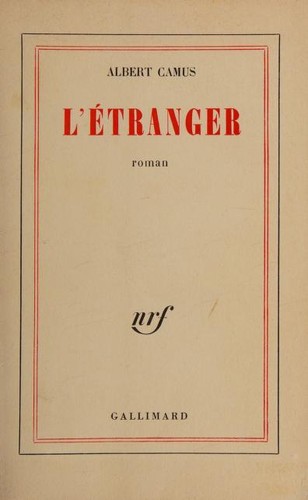
The Stranger
Albert Camus (1942)
“A man kills someone he barely knows, feels nothing, and goes to the guillotine refusing to pretend otherwise — and somehow becomes the most honest person in the room.”
Why This Book Matters
Published in Nazi-occupied France in 1942, The Stranger was immediately recognized as something new: a prose style that enacted its philosophy rather than merely arguing it. Camus was 28. The book became the ur-text of postwar existentialism (despite Camus's later rejection of the label) and has sold more than 10 million copies in France alone. It is the most widely read French-language novel globally.
Firsts & Innovations
Introduced the 'zero degree of writing' — a prose style stripped to the absolute minimum that became the most imitated mode of the twentieth century
First major European novel to place colonial violence at its center while narrating from inside the colonial perspective without critique — creating a text that requires its reader to supply the moral framework
One of the first novels to dramatize the absurdist philosophical position rather than argue it — Meursault IS the Myth of Sisyphus, not an illustration of it
Cultural Impact
Introduced the word 'absurd' as a philosophical category to global popular culture
The opening line ('Maman died today') has become one of the most recognized in world literature
Kamel Daoud's The Meursault Investigation (2013) — the definitive postcolonial response, restoring the Arab's name and story — won the Prix Goncourt du premier roman
Albert Camus won the Nobel Prize in Literature in 1957 at age 43, one of the youngest recipients ever
Camus's death in a car accident in 1960 — with an unused train ticket in his pocket — was called 'the most absurd death in literary history'
Banned & Challenged
Challenged in schools for moral nihilism, for the narrator's lack of remorse, and for its perceived attack on religion and God. Banned or restricted in some Catholic schools and institutions in the 1950s. In postcolonial scholarship, regularly critiqued for its representation (or erasure) of Arab Algerians — assigned alongside Daoud's response novel in many contemporary courses.