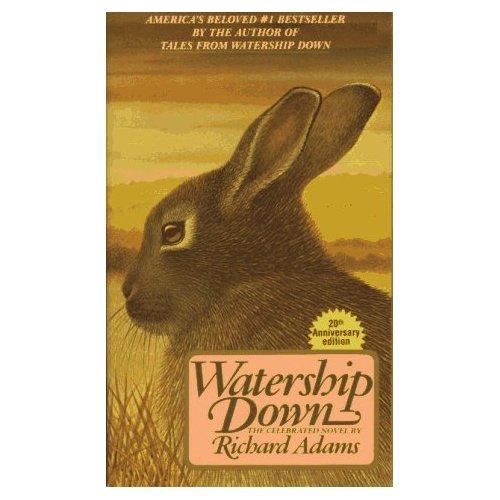
Watership Down
Richard Adams (1972)
“A novel about rabbits that is secretly about every political system humans have ever built — and the stories we tell to survive them.”
At a Glance
Fiver, a runt rabbit with prophetic visions, senses the destruction of his home warren. He convinces his brother Hazel to lead a small band of rabbits on a perilous journey across the English countryside to found a new colony on Watership Down. They survive predators, rivers, and hostile warrens — including the totalitarian police state of Efrafa — before establishing a free society built on courage, cooperation, and the storytelling traditions of their trickster hero El-ahrairah.
Read full summary →Why This Book Matters
Rejected by thirteen publishers, then became one of the best-selling novels in British history. Won both the Carnegie Medal and the Guardian Children's Fiction Prize. Demonstrated that a novel about rabbits could be simultaneously a children's adventure, a political allegory, a work of ecological philosophy, and a meditation on myth and storytelling. It proved that genre boundaries — children's vs. adult, fantasy vs. realism, adventure vs. literature — were artificial constraints that a sufficiently ambitious novel could simply ignore.
Diction Profile
Formal literary prose grounded in precise ecological observation, with embedded oral-tradition passages for the El-ahrairah myths
Moderate