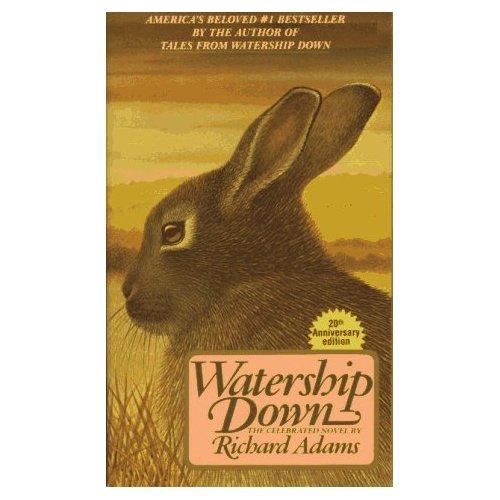
Watership Down
Richard Adams (1972)
“A novel about rabbits that is secretly about every political system humans have ever built — and the stories we tell to survive them.”
Watership Down— Summary & Analysis
by Richard Adams · published 1972 · 476 pages · Contemporary
A user-friendly study guide for Watership Down by Richard Adams (1972): a high-level plot summary, full chapter-by-chapter analysis, theme breakdowns, character profiles, and 30 essay questions designed for middle-school, high-school, ap-english readers. Unlike a stock summary, sumsumsum.com adds a diction analysis drawn from Richard Adams’s actual text, the 2 documented AP Literature exam appearances of this book, and reading-difficulty guidance (Easy, 3/10) so students, teachers, and lifelong readers know what they are walking into.
“A novel about rabbits that is secretly about every political system humans have ever built — and the stories we tell to survive them.”
Short Summary
Fiver, a runt rabbit with prophetic visions, senses the destruction of his home warren. He convinces his brother Hazel to lead a small band of rabbits on a perilous journey across the English countryside to found a new colony on Watership Down. They survive predators, rivers, and hostile warrens — including the totalitarian police state of Efrafa — before establishing a free society built on courage, cooperation, and the storytelling traditions of their trickster hero El-ahrairah.
Detailed Summary
In the Sandleford warren, a small rabbit named Fiver experiences a terrifying vision: the fields are covered in blood, and the warren will be destroyed. His brother Hazel believes him, but the Chief Rabbit dismisses the warning. Hazel gathers a band of rabbits — including the powerful Bigwig, the cl...
Summary in the Author’s Writing Style
A retelling of Watership Down in Richard Adams’s style — so you can hear the language, not just the plot. This is a stylistic pastiche written by sumsumsum, not an excerpt from the book.
The primroses were over. In the long grass at the edge of Sandleford, where the gorse came down to the ditch and the rooks went up at evening, a small rabbit called Fiver crouched and would not feed, because he had seen the field running with blood, though no blood was there, and the smell of it was…
Chapter-by-Chapter Analysis
If you liked Watership Down, read next
Start with Animal Farm by George Orwell — Political allegory through animal society — Orwell's is schematic and satirical where Adams's is ecological and mythological, but both use animals to expose the mechanics of power. Then try The Odyssey by Homer — The foundational journey-home narrative — embedded stories, divine intervention, the hero's return to establish order. Hazel is a rabbit Odysseus, and El-ahrairah is his Athena. Or pivot to Nineteen Eighty-Four by George Orwell — Efrafa IS Orwell's Oceania rendered in rabbit terms — surveillance, suppression of dissent, controlled movement, the destruction of individual will in service of collective security.
For comparative essays, pair Watership Down with
The strongest comparative pairing is Lord of the Flies (William Golding) — A community built from scratch under survival pressure — Golding's children descend into tyranny where Adams's rabbits ascend toward democracy, making the two novels a philosophical argument with each other. For a third angle, contrast with The Wind in the Willows (Kenneth Grahame) — The English pastoral tradition with animal protagonists — Grahame is gentle and nostalgic where Adams is political and violent, but both treat the English countryside as a character.
Each of these pairings opens a clean thesis path on shared themes, period diction, or formal influence — useful for AP Lit / IB / first-year college comparative essays.