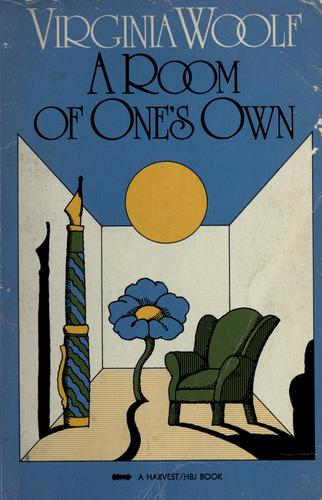
A Room of One's Own
Virginia Woolf (1929)
“A woman needs money and a room of her own to write fiction — but the sentence is only the beginning. Behind it lies four centuries of locked doors, burned manuscripts, invented sisters, and the long material history of why genius requires a bank account.”
This page prints on a single page. Use Ctrl+P / Cmd+P.
A Room of One's Own
Virginia Woolf (1929) · 172pages · Modernist · 7 AP appearances
Summary
Based on two lectures Woolf delivered at Cambridge in 1928, the extended essay argues that women have been systematically denied the material and intellectual conditions necessary for creative work. Woolf traces the absence of women from literary history not to lack of talent but to lack of money, education, and private space. She invents Judith Shakespeare — William's equally gifted sister — to demonstrate what would have happened to a female genius in the sixteenth century: poverty, exploitation, madness, suicide. The essay moves through the British Museum, through Oxbridge colleges, through centuries of male pronouncements about women, arriving at a vision of the androgynous mind as the ideal creative consciousness.
Why It Matters
A Room of One's Own is the founding text of modern feminist literary criticism — the work that first systematically connected the material conditions of women's lives to the literature they could and could not produce. Its central arguments — that creative freedom requires economic independence, ...
Themes & Motifs
Diction & Style
Register: High vocabulary and complex syntax worn lightly — Woolf maintains the tone of a woman thinking aloud at a lectern, confiding in her audience rather than declaiming to them
Narrator: Woolf uses a first-person persona ('call me Mary Beton, Mary Seton, Mary Carmichael, or by any name you please') that...
Figurative Language: Moderate to high
Historical Context
Interwar Britain, 1928-1929 — women's suffrage newly achieved, the aftermath of the Radclyffe Hall obscenity trial, the brief cultural opening between the trauma of WWI and the gathering storm of the 1930s: The essay was delivered at the exact historical moment when women's legal equality was being formally established (full suffrage in 1928) but material equality remained distant. Woolf's argument is...
Key Characters
Talking Points
- Woolf says 'a woman must have money and a room of her own if she is to write fiction.' Is this literally true, or is she making a larger argument through material specifics? What would she say about a brilliant woman writer who was poor and had no private space?
- Why does Woolf invent Judith Shakespeare rather than simply listing historical women who were denied opportunity? What does the thought experiment achieve that historical evidence alone cannot?
- Woolf critiques Charlotte Bronte for writing 'in a rage where she should write calmly.' Is this fair? Is Woolf policing women's anger, or making a genuine argument about artistic quality?
- The essay begins with Woolf being waved off the grass by a Beadle. Why start here rather than with a thesis statement or a historical argument? What does the walk-and-interruption structure accomplish?
- Woolf's theory of the androgynous mind has been criticized by later feminists as a retreat from the political anger of the earlier chapters. Is the androgyny thesis a weakening of the argument or its culmination?
Notable Quotes
“A woman must have money and a room of her own if she is to write fiction.”
“Lock up your libraries if you like; but there is no gate, no lock, no bolt that you can set upon the freedom of my mind.”
“One cannot think well, love well, sleep well, if one has not dined well.”
Why Read This
Because the essay teaches you to see the invisible — the material conditions that shape who gets to create and who does not. Every time you read a book and notice who wrote it, every time you walk through a university and notice whose names are on...