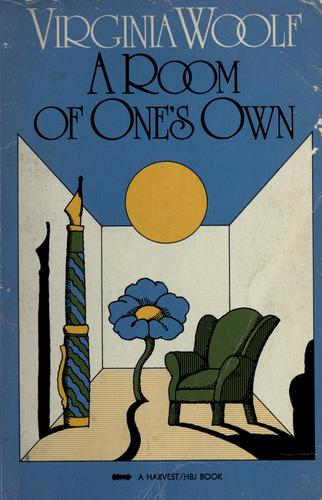
A Room of One's Own
Virginia Woolf (1929)
“A woman needs money and a room of her own to write fiction — but the sentence is only the beginning. Behind it lies four centuries of locked doors, burned manuscripts, invented sisters, and the long material history of why genius requires a bank account.”
Essay Questions & Food for Thought
30questions designed to challenge assumptions and provoke original thinking. These can't be answered from a summary — you need the actual text.
Woolf says 'a woman must have money and a room of her own if she is to write fiction.' Is this literally true, or is she making a larger argument through material specifics? What would she say about a brilliant woman writer who was poor and had no private space?
Why does Woolf invent Judith Shakespeare rather than simply listing historical women who were denied opportunity? What does the thought experiment achieve that historical evidence alone cannot?
Woolf critiques Charlotte Bronte for writing 'in a rage where she should write calmly.' Is this fair? Is Woolf policing women's anger, or making a genuine argument about artistic quality?
The essay begins with Woolf being waved off the grass by a Beadle. Why start here rather than with a thesis statement or a historical argument? What does the walk-and-interruption structure accomplish?
Woolf's theory of the androgynous mind has been criticized by later feminists as a retreat from the political anger of the earlier chapters. Is the androgyny thesis a weakening of the argument or its culmination?
'Chloe liked Olivia.' Why does Woolf surround this simple sentence with elaborate precautions — checking for men in the audience, warning readers not to blush? What is at stake in this moment?
Woolf contrasts the men's college lunch (sole, partridge, wine) with the women's college dinner (soup, beef, prunes). Is this a fair comparison? Does the quality of a meal really affect the quality of thought?
Woolf says women have served as 'looking glasses possessing the magic and delicious power of reflecting the figure of man at twice its natural size.' Unpack this metaphor. How does it work as a theory of patriarchal ideology?
Woolf writes under a composite persona — 'call me Mary Beton.' Why not write as herself? What does the fictional persona allow that a straightforward first-person essay would not?
The essay was delivered as lectures at women's colleges in Cambridge. How does the original audience shape what Woolf says and how she says it? Would the essay be different if delivered to a mixed audience?
Woolf praises Jane Austen for inventing 'a perfectly natural, shapely sentence proper for her own use.' What makes a sentence 'proper for her own use'? Can you identify a sentence in any woman writer that feels distinctly female in its construction?
The essay's material argument — money and rooms — has been criticized for its class assumptions. Woolf's five hundred pounds a year was available to very few women. Does this class blindness weaken her argument?
Woolf says 'it is fatal to be a man or woman pure and simple; one must be woman-manly or man-womanly.' What does this mean in practice? Can you identify a writer whose work feels androgynous in Woolf's sense?
Woolf describes 'a shadow shaped something like the letter I' lying across the page of a male writer's novel. What is wrong with the 'I' in writing? Is all first-person narration suspect, or only a certain kind?
Judith Shakespeare is buried 'at some crossroads where the omnibuses now stop outside the Elephant and Castle.' Why this specific detail? What does the ordinariness of the location do to the argument?
Compare A Room of One's Own to a modern argument about access and opportunity — for example, arguments about who gets funding in tech startups, whose stories get told in film, or which neighborhoods have good schools. Does Woolf's framework still apply?
Woolf argues that Aphra Behn is more important to women's literary history than any individual genius. Why? What does Behn represent that talent alone cannot?
The essay is structured as a series of digressions rather than a linear argument. Map its movement: where does Woolf wander, and why? Does the digressive structure weaken or strengthen the argument?
Woolf wrote this essay in 1928-1929. Nearly a century later, women have money, rooms, degrees, and publishing contracts. Has Woolf's argument been fulfilled, or does it still apply? What would she say about women's literature today?
Woolf says anger in writing is destructive — it warps the prose and distorts the vision. But some of the greatest literature is angry: Frederick Douglass, James Baldwin, Toni Morrison. Is Woolf wrong about anger?
The essay's most famous line is often quoted without context: 'A woman must have money and a room of her own.' How does the full essay change your understanding of that sentence? What is lost when it is quoted in isolation?
Woolf does not mention race, colonialism, or non-European women in the essay. Is this a limitation of its time, or a fundamental flaw in its argument? How would the essay change if it included the perspectives of women of color?
Woolf ends by saying Judith Shakespeare 'would come if we worked for her.' What kind of work does she mean? Is it political work, literary work, economic work, or all three?
Compare Woolf's essay method — digressive, personal, story-based — to a conventional academic argument about the same subject. What does Woolf's form accomplish that a scholarly article cannot?
Woolf says the looking-glass function of women is 'essential to all violent and heroic action.' She connects domestic gender roles to imperialism and war. Explain how this connection works in her argument.
The essay was published the year after women gained full suffrage in Britain. Why does Woolf argue that the vote is not enough? What does her argument add to the suffrage movement's achievements?
Woolf reads a fictional novel by Mary Carmichael and finds the sentence 'Chloe liked Olivia.' She says this opens 'a new landscape' in literature. What does she mean? What landscape has been closed until now?
Woolf argues that great writing is 'incandescent' — the ego burns away and the subject shines through. Is this possible? Can any writer fully transcend their personal identity in their work?
If Woolf were writing A Room of One's Own today, what would she need to add? What material conditions beyond money and a room does a woman need in 2026 to write freely?
Woolf calls A Room of One's Own an essay, not a manifesto. Why does the distinction matter? How would the argument change if it were written as a manifesto — direct demands, numbered points, political program?