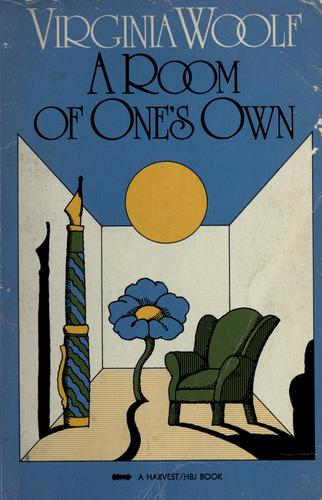
A Room of One's Own
Virginia Woolf (1929)
“A woman needs money and a room of her own to write fiction — but the sentence is only the beginning. Behind it lies four centuries of locked doors, burned manuscripts, invented sisters, and the long material history of why genius requires a bank account.”
For Students
Because the essay teaches you to see the invisible — the material conditions that shape who gets to create and who does not. Every time you read a book and notice who wrote it, every time you walk through a university and notice whose names are on the buildings, every time you wonder why certain voices dominate and others are absent, you are asking the question Woolf asked first. The essay does not just argue about the past. It gives you a framework for seeing the present.
For Teachers
The essay is ideal for teaching the intersection of literary criticism, feminist theory, and material analysis. It models a kind of close reading that connects textual features (sentence structure, narrative form, authorial voice) to the social conditions of their production. It is also a masterclass in essay form — Woolf's digressive, associative method is itself an argument about how women think, and teaching the form alongside the content doubles the pedagogical value. The AP exam has used it for rhetorical analysis, argumentative writing, and literary criticism questions.
Why It Still Matters
The argument extends far beyond gender. Anyone who has been told their voice does not belong — in a profession, a field, an institution — will recognize Woolf's analysis. The locked library door, the Beadle waving you off the grass, the meal that is adequate but not inspiring — these are the universal experiences of exclusion. And the prescription is equally universal: material independence, private space, the refusal to internalize the limitations others impose. Five hundred pounds and a room of your own is not a formula for women only. It is a formula for anyone who wants to think freely.