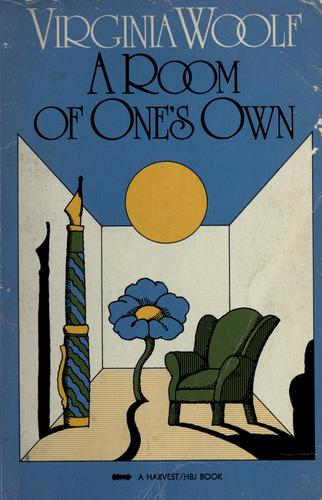
A Room of One's Own
Virginia Woolf (1929)
“A woman needs money and a room of her own to write fiction — but the sentence is only the beginning. Behind it lies four centuries of locked doors, burned manuscripts, invented sisters, and the long material history of why genius requires a bank account.”
Language Register
High vocabulary and complex syntax worn lightly — Woolf maintains the tone of a woman thinking aloud at a lectern, confiding in her audience rather than declaiming to them
Syntax Profile
The essay's sentences move by association and digression rather than linear argument — Woolf follows a thought, loses it, finds it again, admits she has lost it. The syntax performs the kind of thinking it advocates: exploratory, circling, willing to be interrupted. Semi-colons connect rather than close. Parenthetical qualifications proliferate. The effect is of a brilliant mind working in real time rather than delivering pre-formed conclusions. When Woolf does arrive at a direct statement — 'A woman must have money and a room of her own' — the directness is shocking precisely because the surrounding prose has been so fluid.
Figurative Language
Moderate to high — but Woolf's figures are always grounded in material reality. The looking glass that reflects men at twice their size is a metaphor, but it describes a real social function. The locked door is a metaphor, but Woolf means an actual door. The five hundred pounds is both literal and symbolic. The essay refuses to let its imagery float free of the material conditions it describes.
Era-Specific Language
Approximately 35,000 pounds in 2020s money; a modest but sufficient income that would free a woman from the need to earn male approval. Woolf inherited roughly this amount from her aunt.
Woolf's composite of Oxford and Cambridge, the two ancient English universities. Women's colleges existed but were underfunded and peripheral to institutional power.
A university official enforcing rules — the Beadle who waves Woolf off the grass is the essay's first symbol of institutional exclusion operating through minor functionaries rather than dramatic confrontation.
The shared family room where Austen wrote and hid her manuscripts; represents the absence of private space that shaped women's literary production for centuries.
Woolf's invented figure — William's equally gifted sister — used to demonstrate that genius without material opportunity produces not art but madness and death.
A London intersection where omnibuses stop; the location of Judith Shakespeare's imagined unmarked grave, chosen for its ordinariness — genius buried beneath daily traffic.
How Characters Speak — Class & Identity
The narrator (Mary Beton / Woolf)
Upper-middle-class, educated, financially independent after her inheritance. She moves through Oxbridge and the British Museum with the ease of someone who belongs to the intellectual class even as she is excluded from its institutions by sex. Her self-deprecation is strategic — she knows her privilege and uses it to sharpen rather than soften her argument.
Woolf is aware that her argument comes from a position of relative comfort. She does not pretend to speak for all women — she speaks as a woman with five hundred pounds a year who can see what that money makes possible and what its absence destroys.
The Oxbridge men
Their world is rendered through its meals, its lawns, its libraries — the material abundance that centuries of endowment have produced. They are not individually hostile; they are institutionally comfortable. The exclusion of women is not their decision but their inheritance.
Woolf's critique targets systems rather than individuals. The men at the well-funded college are not villains — they are beneficiaries of a system that advantages them without requiring their active consent.
The women's college students
Woolf's audience — young, educated, at the threshold of intellectual life. They eat plain meals, study in underfunded libraries, and will enter a world that has not yet decided whether to take them seriously.
The essay is addressed to the next generation — women who might secure the material conditions that Woolf's generation lacked. The obligation is forward-facing.
Narrator's Voice
Woolf uses a first-person persona ('call me Mary Beton, Mary Seton, Mary Carmichael, or by any name you please') that is simultaneously herself and a composite figure. The narrator wanders, digresses, tells stories, admits confusion, follows threads that seem irrelevant and turn out to be essential. The voice is intimate, conspiratorial — she is speaking to women, among women, in a room where men are not present. The privacy of the address is itself part of the argument.
Tone Progression
Chapter 1 (Oxbridge)
Wry, observational, deceptively casual
Woolf walks, eats, and is excluded — all rendered with a lightness that makes the exclusion more visible, not less.
Chapter 2 (British Museum)
Analytical, increasingly sharp
The humor gives way to intellectual detective work as Woolf uncovers the mechanism of male anger.
Chapter 3 (Judith Shakespeare)
Devastating, restrained, furious beneath the surface
The flatness of Judith's death sentence is the essay's most emotionally powerful moment.
Chapter 4 (Women who wrote)
Literary-critical, sympathetic, precise
Close reading as political argument — each writer's style reveals her material conditions.
Chapter 5 (Chloe liked Olivia)
Urgent, conspiratorial, forward-looking
The essay turns from diagnosis to prescription, imagining what women's literature might become.
Chapter 6 (Androgyny and obligation)
Visionary and bluntly practical in alternation
The essay refuses to resolve into either aesthetics or economics, holding both in tension to the end.
Stylistic Comparisons
- Montaigne's Essays — the same wandering, digressive, first-person method; thinking as a form of walking, the essay as a journey without a predetermined destination
- Simone de Beauvoir's The Second Sex (1949) — the philosophical and political heir to Woolf's argument, extending the material analysis into existentialist framework
- Woolf's own Mrs. Dalloway (1925) — the novel performs the stream of consciousness that the essay theorizes; together they constitute Woolf's double argument about how women think and why they cannot
Key Vocabulary from This Book
Notable words used in this text — click to see full definitions