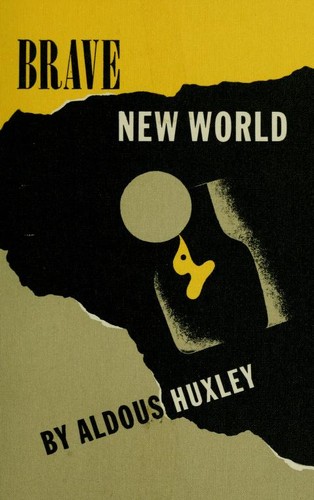
Brave New World
Aldous Huxley (1932)
“A world where everyone is happy, no one suffers, and something irreplaceable has been destroyed.”
At a Glance
In the World State of 632 A.F. (After Ford), human beings are manufactured in hatcheries, conditioned from birth, and kept pacified with the pleasure drug soma. Bernard Marx, an Alpha intellectual who feels like an outsider, takes the pneumatic Lenina Crowne to a Savage Reservation in New Mexico, where they discover John — the son of a World State woman, raised on Shakespeare. John is brought back to civilization as a curiosity, but he's horrified by its shallow hedonism. When he rebels, demanding the right to be unhappy, the World Controller Mustapha Mond explains why the choice was made: stability required the sacrifice of art, science, religion, and authentic emotion. John retreats to a lighthouse to live as an ascetic and is eventually destroyed by the world's voyeuristic hunger for his suffering.
Read full summary →Why This Book Matters
Published in 1932, it was immediately recognized as a significant work but did not achieve its current canonical status until after Nineteen Eighty-Four (1949) made dystopian fiction culturally central. The comparison with Orwell clarified what Huxley was doing: where Orwell feared totalitarianism through pain, Huxley feared it through pleasure. The two novels are now read together as complementary warnings — and many critics argue the twenty-first century has proved Huxley more prescient.
Diction Profile
Formal-scientific in World State sections; archaic Shakespearean for John; journalistic irony throughout
High in satirical passages; deliberately flat in administrative/conditioning descriptions. The horror of World State language is its absence of figurative language