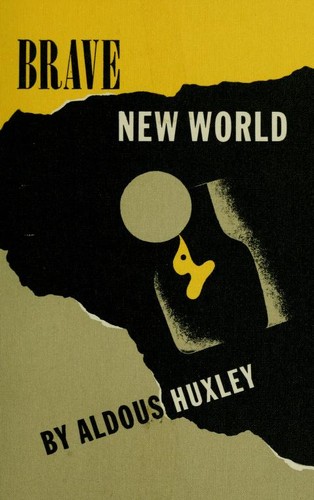
Brave New World
Aldous Huxley (1932)
“A world where everyone is happy, no one suffers, and something irreplaceable has been destroyed.”
Similar Books
Thematic connections across eras and genres — books that talk to each other.
Nineteen Eighty-Four
George Orwell
The essential companion — pain vs. pleasure as control, surveillance vs. conditioning, the same warning delivered through opposite methods
We
Yevgeny Zamyatin
The 1921 Russian novel that both Huxley and Orwell drew from — the first great dystopia, almost unknown in the West
The Handmaid's Tale
Margaret Atwood
Completes the dystopian triangle — Huxley's pleasure, Orwell's surveillance, Atwood's religious patriarchy, all warning about social stability purchased through oppression
Island
Aldous Huxley
Huxley's final novel — his attempt to imagine a utopia that works, a positive answer to Brave New World's negative argument
The Giver
Lois Lowry
Young adult version of Huxley's core argument — a community that abolished suffering by abolishing choice, and one person who discovers the cost
Player Piano
Kurt Vonnegut
A satirical dystopia where automation has replaced human work and therefore human purpose — Vonnegut's 1952 answer to Huxley's 1932 question