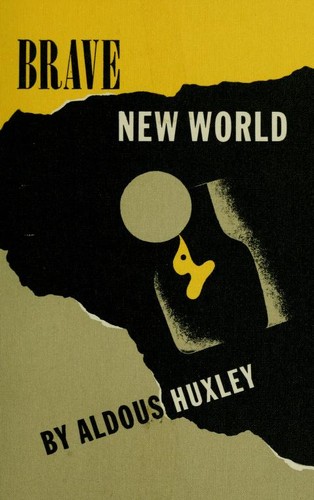
Brave New World
Aldous Huxley (1932)
“A world where everyone is happy, no one suffers, and something irreplaceable has been destroyed.”
For Students
Because Huxley predicted Instagram, SSRIs, Netflix, and genetic engineering in 1932 — and explained the philosophical problem with all of them simultaneously. The World State is not obviously evil. That's the entire point. Everything it does makes a kind of sense, and understanding WHY it's still horrifying is the most important exercise in the book. Also: it's genuinely funnier than most dystopian fiction, and you'll understand every cultural reference to soma and Big Brother you've been nodding at for years.
For Teachers
The Mond-John dialogue in Chapters 16-17 is one of the most teachable philosophical arguments in fiction — both positions are defensible, evidence is provided for each, and students must actually engage with the trade-offs rather than simply condemning the dystopia. The diction analysis alone — tracking John's Shakespearean English against World State clinical prose — supports multiple close-reading units. The author biography connects Victorian science, interwar politics, and 1960s psychedelics in ways that make history feel urgent.
Why It Still Matters
The World State is a plausible extrapolation of comfort-seeking, not a fantasy of cruelty. Every time you choose to feel better rather than feel clearly — soma by any other name — you're making the World State's argument for it. Social media algorithms optimize for engagement the way hypnopaedia optimizes for compliance. The feely exists; we call it virtual reality. The question the novel asks — what are you willing to give up for comfort? — has never been more practical.