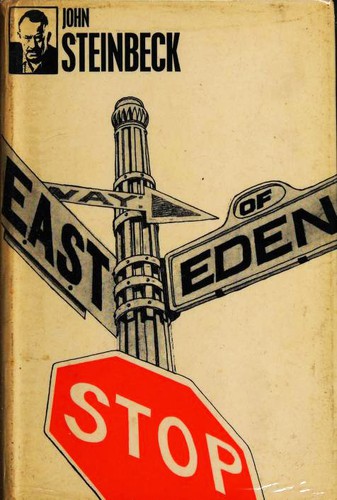
East of Eden
John Steinbeck (1952)
“Steinbeck's masterwork asks whether evil is inherited or chosen — and answers with a single Hebrew word that changes everything.”
Similar Books
Thematic connections across eras and genres — books that talk to each other.
The Great Gatsby
F. Scott Fitzgerald
Both are American myths — Fitzgerald's is vertical (class and the Dream), Steinbeck's is horizontal (family and the land). The green light and timshel are different answers to the same American question.
The Brothers Karamazov
Fyodor Dostoevsky
The closest analogue in world literature: multi-generational family saga structured around competing moral philosophies, with a wise mentor figure (Zosima/Samuel) and a dark-and-light sibling pair
Beloved
Toni Morrison
Both novels argue that inherited trauma is real but not destiny. Morrison's characters carry slavery's wound; Steinbeck's carry the Cain pattern. Both insist the story can be told otherwise.
One Hundred Years of Solitude
Gabriel García Márquez
The family-saga-as-myth form, tracking a family across generations with recurring names and fates. Márquez is more fatalistic; Steinbeck inserts timshel as the break in the cycle.
The Grapes of Wrath
John Steinbeck
Steinbeck's other California masterpiece — the Joad family fleeing the Dust Bowl. Where East of Eden is mythic and biblical, Grapes of Wrath is documentary and political. Two ways Steinbeck loved the same land.
Blood Meridian
Cormac McCarthy
McCarthy's Judge Holden is the answer to the question Steinbeck asked about Cathy: what does absolute evil look like when taken seriously? A much darker answer than Steinbeck's.