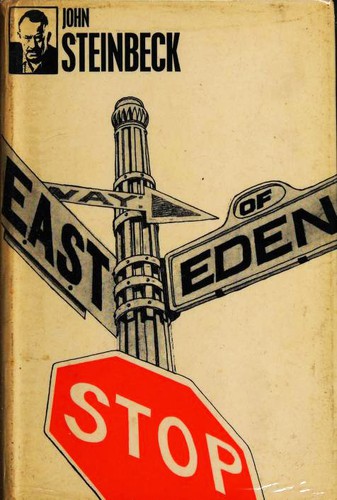
East of Eden
John Steinbeck (1952)
“Steinbeck's masterwork asks whether evil is inherited or chosen — and answers with a single Hebrew word that changes everything.”
For Students
Because the question the novel asks — are you defined by your worst impulse or by what you do next? — is the most important question a person can face at seventeen. And because 'timshel' is a more useful framework than anything you will find on social media. The novel is long, but every one of its 601 pages is doing philosophical work. You cannot skim it without missing something essential.
For Teachers
The richest AP text available for studying the intersection of biblical allegory, moral philosophy, and realistic characterization. The Cain-Abel framework allows students to engage with the text analytically from the first chapter. The 'timshel' passage alone supports an entire unit on close reading, translation, and philosophical argument. The character of Lee tests students' assumptions about whose intelligence the novel centers.
Why It Still Matters
Every family has a Cal and an Aron — the difficult child and the easy one, the one the parents see clearly and the one they project onto. Every person has felt at some point that their nature is their destiny. Steinbeck's answer — 'timshel,' you may choose — is not reassurance. It is a challenge. The choice is yours. That remains the most terrifying and the most liberating thing a book can say.