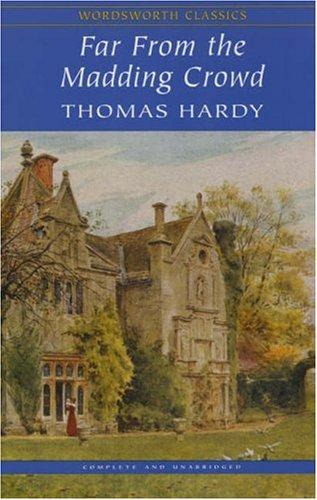
Far from the Madding Crowd
Thomas Hardy (1874)
“Three men love one woman in Hardy's Wessex — and each offers a different vision of what love demands, destroys, and endures.”
This page prints on a single page. Use Ctrl+P / Cmd+P.
Far from the Madding Crowd
Thomas Hardy (1874) · 416pages · Victorian · 3 AP appearances
Summary
Bathsheba Everdene, a beautiful and fiercely independent young woman, inherits a farm in Wessex and finds herself courted by three very different men: Gabriel Oak, a steadfast shepherd who loves her without conditions; William Boldwood, a prosperous gentleman farmer driven to obsession by a careless valentine; and Sergeant Francis Troy, a dashing soldier whose passionate charm conceals recklessness and cruelty. Troy marries Bathsheba, squanders her fortune, and disappears after the death of Fanny Robin — the woman he truly loved. When Troy returns and Boldwood shoots him dead, only Oak remains. Bathsheba, humbled and matured, finally recognizes the quiet, enduring love she had dismissed from the start.
Why It Matters
Far from the Madding Crowd was Hardy's breakthrough — the novel that established him as a major Victorian writer and invented Wessex as a literary landscape. Serialized in the Cornhill Magazine (edited by Leslie Stephen, Virginia Woolf's father), it reached a wide audience and demonstrated that r...
Themes & Motifs
Diction & Style
Register: Elevated Victorian prose mixed with Wessex dialect in dialogue — the narrator is literary and philosophical while the farmworkers speak in rich regional vernacular
Narrator: Third-person omniscient, philosophically inclined, gently ironic. Hardy's narrator moves freely between interior psyc...
Figurative Language: Moderate to high
Historical Context
1870s rural England — agricultural depression, shifting class structures, emerging feminism: Bathsheba's independence as a female farm owner was legally precarious in the 1870s — married women could not own property independently. Her refusal to marry is not merely romantic preference but ...
Key Characters
Talking Points
- Hardy presents three suitors for Bathsheba — Oak (steady), Boldwood (obsessive), Troy (passionate). Which does the novel argue is the 'right' kind of love, and what evidence supports your reading?
- Bathsheba sends the valentine on impulse. Is Hardy suggesting that small, thoughtless acts can cause as much destruction as deliberate malice? Find three consequences of the valentine.
- The sword-exercise scene is often called the most erotic passage in Victorian literature. How does Hardy convey sexual tension without explicit content? What literary techniques does he use?
- Why does Hardy name his protagonist 'Oak'? How does the name function as characterization, and what does it tell us about Hardy's values?
- Fanny Robin's baby was censored from the magazine serialization. Why would a Victorian editor find the baby more objectionable than Fanny's death? What does restoring it add to the novel?
Why Read This
Because Bathsheba Everdene is one of the most complex female characters in English literature — independent, impulsive, capable of real growth — and Hardy gives her three suitors who represent three fundamentally different ideas about what love is...