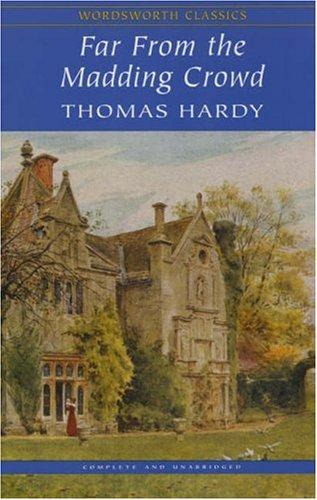
Far from the Madding Crowd
Thomas Hardy (1874)
“Three men love one woman in Hardy's Wessex — and each offers a different vision of what love demands, destroys, and endures.”
For Students
Because Bathsheba Everdene is one of the most complex female characters in English literature — independent, impulsive, capable of real growth — and Hardy gives her three suitors who represent three fundamentally different ideas about what love is. The novel asks questions that are still urgent: Can you be independent and in love? Is passion or patience more valuable? What do we owe the people we hurt carelessly? And Hardy's Wessex — his invented landscape of farms, storms, and seasons — is one of literature's great imaginary places, as fully realized as Faulkner's Yoknapatawpha or Tolkien's Middle-earth.
For Teachers
Ideal for units on Victorian literature, the pastoral tradition, or gender in fiction. The three-suitor structure provides a natural framework for comparative analysis. The diction work is rich — Hardy's narrator, the dialect speakers, Troy's performative flattery, and Boldwood's stilted formality offer distinct registers for close reading. The valentine scene is a perfect case study in moral causation, and the coffin scene supports advanced discussions of editorial censorship and authorial intent.
Why It Still Matters
The valentine scene is a text message sent without thinking — a careless communication that destroys someone's life. Bathsheba's dilemma between the exciting partner and the reliable one is replicated in every dating app. Troy's charm-without-substance is every charismatic person who turns out to be hollow. And Oak — patient, competent, undemanding — is the partner everyone needs and nobody recognizes until it's almost too late.