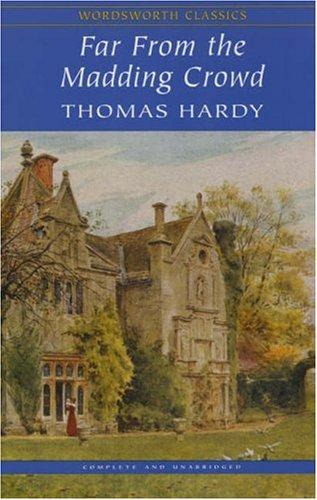
Far from the Madding Crowd
Thomas Hardy (1874)
“Three men love one woman in Hardy's Wessex — and each offers a different vision of what love demands, destroys, and endures.”
Why This Book Matters
Far from the Madding Crowd was Hardy's breakthrough — the novel that established him as a major Victorian writer and invented Wessex as a literary landscape. Serialized in the Cornhill Magazine (edited by Leslie Stephen, Virginia Woolf's father), it reached a wide audience and demonstrated that rural life could sustain serious literary fiction. Bathsheba Everdene remains one of English literature's great female characters — independent, flawed, resilient, and permitted to grow. The novel pioneered the integration of landscape and psychology that would define Hardy's subsequent masterpieces.
Firsts & Innovations
First appearance of Hardy's Wessex — the fictional county that became one of literature's most fully realized imaginary geographies
One of the earliest Victorian novels to center a woman who runs a business, refuses marriage, and is not punished for her independence
Pioneered the sustained integration of agricultural landscape with psychological narrative in English fiction
Cultural Impact
Bathsheba Everdene's name was consciously borrowed by Suzanne Collins for Katniss Everdeen in The Hunger Games — a deliberate lineage of independent literary heroines
Adapted for film multiple times — most notably John Schlesinger's 1967 version (Julie Christie) and Thomas Vinterberg's 2015 adaptation (Carey Mulligan)
Established the template for Hardy's Wessex novels, which would include The Return of the Native, The Mayor of Casterbridge, Tess, and Jude
The sword-exercise scene became a touchstone for discussions of Victorian sexuality and what could be implied without being stated
Influenced D.H. Lawrence, John Fowles, and Ian McEwan in their integration of landscape, sexuality, and psychological realism
Banned & Challenged
Not banned, but censored during serialization — Leslie Stephen required Hardy to remove the detail of Fanny Robin's baby from the magazine version, fearing it was too explicit. Hardy restored it for the book edition. The episode foreshadowed the more severe censorship battles Hardy would face with Tess and Jude.