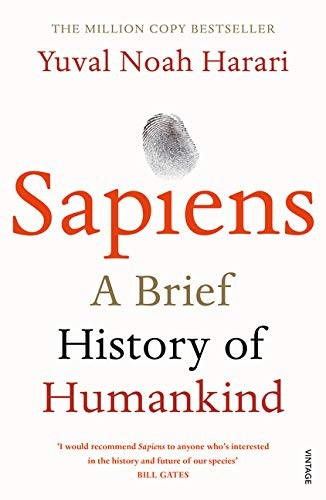
Sapiens: A Brief History of Humankind
Yuval Noah Harari (2011)
“A historian argues that everything holding civilization together — money, religion, nations, human rights — is a fiction we collectively agreed to believe.”
Similar Books
Thematic connections across eras and genres — books that talk to each other.
Guns, Germs, and Steel
Jared Diamond
The closest structural predecessor — Diamond explains civilizational dominance through geography; Harari explains it through cognitive and institutional structures. Reading both reveals what each leaves out.
Homo Deus: A Brief History of Tomorrow
Yuval Noah Harari
Harari's direct sequel — picks up where Sapiens ends and asks what happens when biotechnology and AI surpass human capabilities. The optimism of Sapiens curdles into something darker.
On the Origin of Species
Charles Darwin
The book that first placed humans within the animal kingdom rather than above it — Harari's entire project is an extension of Darwin's radical decentering of Homo sapiens.
Thinking, Fast and Slow
Daniel Kahneman
Kahneman dismantles individual rationality the way Harari dismantles collective institutions — together they demolish the Enlightenment assumption that humans are rational actors.
A Short History of Nearly Everything
Bill Bryson
Similar scope and accessibility but focused on the physical sciences rather than human culture — Bryson is the charming companion; Harari is the provocative one.
The Better Angels of Our Nature
Steven Pinker
Pinker's optimistic case for human progress is the direct counterargument to Harari's agnosticism about whether civilization has made humans happier — reading both sharpens both.