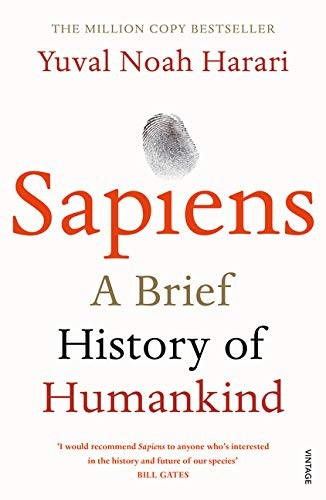
Sapiens: A Brief History of Humankind
Yuval Noah Harari (2011)
“A historian argues that everything holding civilization together — money, religion, nations, human rights — is a fiction we collectively agreed to believe.”
For Students
Because every institution you take for granted — money, your country, your rights, your religion — is a story that humans invented and collectively agreed to believe. Once you see this, you cannot unsee it. Sapiens does not tell you what to believe; it shows you the machinery behind belief itself. That is the most dangerous and liberating education available. And at 443 pages for 70,000 years of history, it is the most efficient introduction to what your species has done — and what it is about to do to itself.
For Teachers
Sapiens works across disciplines: history, philosophy, biology, economics, religious studies, and ethics. It generates genuine classroom debate because students will disagree with Harari — passionately — on religion, progress, and human rights. The 'imagined orders' framework is a powerful teaching tool for critical thinking: once students can identify the fictions that structure their own lives, they are doing philosophy whether they know it or not. The book's accessibility means even reluctant readers can engage with substantive ideas.
Why It Still Matters
We live in an age of collapsing fictions — democratic norms questioned, financial systems distrusted, religions declining, new mythologies (crypto, AI, social media platforms) rising. Harari's framework does not tell you which fictions to believe. It teaches you to recognize that they ARE fictions — which is the first step toward choosing wisely among them. In a world of algorithmic manipulation and manufactured consensus, the ability to see the story behind the story is not an academic luxury. It is survival equipment.