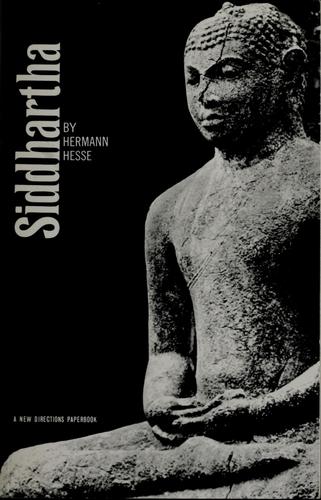
Siddhartha
Hermann Hesse (1922)
“A Brahmin's son walks away from everything — family, religion, love, wealth — in search of a self that cannot be taught.”
At a Glance
Siddhartha, the brilliant son of a Brahmin priest in ancient India, abandons his privileged life to seek enlightenment. He travels with wandering ascetics, sits at the feet of the Buddha, pursues pleasure and wealth with the courtesan Kamala and the merchant Kamaswami, loses everything, and finally finds peace as a ferryman beside a river that knows all things. His childhood friend Govinda searches his whole life for the same truth — and finds it, at the very end, only when he stops searching.
Read full summary →Why This Book Matters
Published in 1922 to modest success, Siddhartha became one of the most widely read novels in the world during the 1960s and 70s counterculture movements, particularly in the United States, where it sold millions of copies. It remains a standard text in high school and college comparative literature and world religion courses. Hesse won the Nobel Prize in 1946, partly on the strength of this novel and Steppenwolf.
Diction Profile
Formal, incantatory — closer to sacred text than to social novel. Eschews colloquialism entirely.
Moderate but highly concentrated. Hesse uses the river as a sustained metaphor that develops across the entire second half of the novel. His figures are not decorative but structural