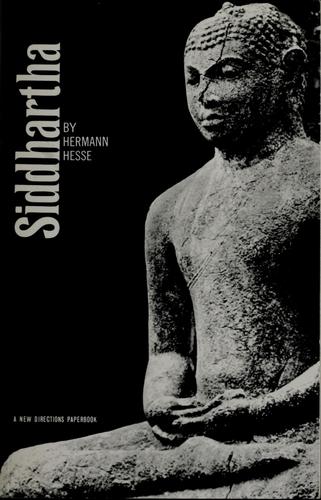
Siddhartha
Hermann Hesse (1922)
“A Brahmin's son walks away from everything — family, religion, love, wealth — in search of a self that cannot be taught.”
This page prints on a single page. Use Ctrl+P / Cmd+P.
Siddhartha
Hermann Hesse (1922) · 152pages · Modernist / Eastern Philosophy · 6 AP appearances
Summary
Siddhartha, the brilliant son of a Brahmin priest in ancient India, abandons his privileged life to seek enlightenment. He travels with wandering ascetics, sits at the feet of the Buddha, pursues pleasure and wealth with the courtesan Kamala and the merchant Kamaswami, loses everything, and finally finds peace as a ferryman beside a river that knows all things. His childhood friend Govinda searches his whole life for the same truth — and finds it, at the very end, only when he stops searching.
Why It Matters
Published in 1922 to modest success, Siddhartha became one of the most widely read novels in the world during the 1960s and 70s counterculture movements, particularly in the United States, where it sold millions of copies. It remains a standard text in high school and college comparative literatu...
Themes & Motifs
Diction & Style
Register: Formal, incantatory — closer to sacred text than to social novel. Eschews colloquialism entirely.
Narrator: Third-person omniscient, but intimate — the narrator knows Siddhartha's interior completely and renders it with the s...
Figurative Language: Moderate but highly concentrated. Hesse uses the river as a sustained metaphor that develops across the entire second half of the novel. His figures are not decorative but structural
Historical Context
Published 1922, Weimar Republic Germany — written between 1919 and 1922 in the aftermath of World War One: Siddhartha is a post-war novel masquerading as an ancient Indian tale. The question it asks — what is a self, and how does one find it when every external authority has failed? — was the burning qu...
Key Characters
Talking Points
- Siddhartha rejects the Buddha's teaching even though he recognizes Gautama as genuinely enlightened. Is his argument logically sound? Can spiritual experience be transmitted through doctrine?
- Hesse names his protagonist Siddhartha — the birth name of the historical Buddha — but his Siddhartha is not the Buddha and explicitly refuses to follow him. What is Hesse arguing by using this name?
- Govinda follows every external teacher his entire life — the Samanas, the Buddha — and finds enlightenment only at the very end, through contact with Siddhartha rather than through doctrine. Is Govinda's path inferior, or just different?
- Hesse describes the ordinary people of the city as 'childlike people' — a term that mixes compassion with condescension. Does Siddhartha actually overcome his superiority complex? Find evidence for both sides.
- The river appears at every major turning point in the novel. Map every appearance of the river and trace how Siddhartha's relationship to it changes. What does this tell you about Hesse's use of setting as symbol?
Notable Quotes
“Siddhartha had one single goal — to become empty, to become empty of thirst, desire, dreams, pleasure and sorrow — to let the Self die.”
“His father's heart was filled with longing and sorrow, with fear and love... He stood silently, stood so that time passed.”
“No one finds salvation through teachings. You, O Honored One, will be unable to convey to anyone in words and through teachings what happened to yo...”
Why Read This
Because it asks the question every high school student is actually asking: who am I when I stop being what everyone expects me to be? Siddhartha leaves his family's expectations, tries three or four different paths to identity, nearly destroys him...