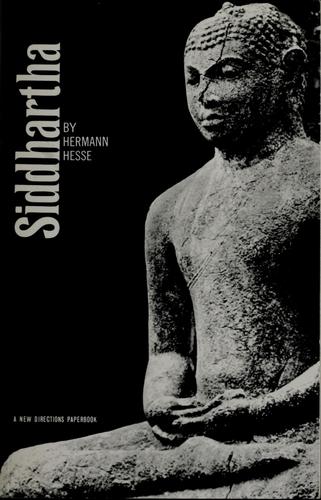
Siddhartha
Hermann Hesse (1922)
“A Brahmin's son walks away from everything — family, religion, love, wealth — in search of a self that cannot be taught.”
Siddhartha— Summary & Analysis
by Hermann Hesse · published 1922 · 152 pages · Modernist / Eastern Philosophy
A user-friendly study guide for Siddhartha by Hermann Hesse (1922): a high-level plot summary, full chapter-by-chapter analysis, theme breakdowns, character profiles, and 30 essay questions designed for high-school, ap-english, college readers. Unlike a stock summary, sumsumsum.com adds a diction analysis drawn from Hermann Hesse’s actual text, the 6 documented AP Literature exam appearances of this book, and reading-difficulty guidance (Easy, 2/10) so students, teachers, and lifelong readers know what they are walking into.
“A Brahmin's son walks away from everything — family, religion, love, wealth — in search of a self that cannot be taught.”
Short Summary
Siddhartha, the brilliant son of a Brahmin priest in ancient India, abandons his privileged life to seek enlightenment. He travels with wandering ascetics, sits at the feet of the Buddha, pursues pleasure and wealth with the courtesan Kamala and the merchant Kamaswami, loses everything, and finally finds peace as a ferryman beside a river that knows all things. His childhood friend Govinda searches his whole life for the same truth — and finds it, at the very end, only when he stops searching.
Detailed Summary
Siddhartha is the gifted son of a Brahmin in ancient India. Everyone loves him; everything comes easily. Yet he is restless. The rituals of his caste, the teachings of his father, the prayers he performs — they offer no path to the Self he feels hiding behind all surface things. Against his father's...
Summary in the Author’s Writing Style
A retelling of Siddhartha in Hermann Hesse’s style — so you can hear the language, not just the plot. This is a stylistic pastiche written by sumsumsum, not an excerpt from the book.
In the shade of the mango grove, in the sunlight of the riverbank, Siddhartha grew, the handsome son of the Brahmin. Everyone loved him. His father loved him for his quickness, his mother loved him for the way he walked, the daughters of the Brahmins loved him for his slender brightness. Yet within …
Chapter-by-Chapter Analysis
If you liked Siddhartha, read next
Start with The Death of Ivan Ilyich by Leo Tolstoy — A man reaches the threshold of death before understanding how to live — same structure of worldly success revealed as emptiness, same quiet epiphany at the end. Or pivot to The Bhagavad Gita by Traditional (attributed to Vyasa) — The sacred text most directly behind Siddhartha — the dialogue between Arjuna and Krishna maps directly onto the novel's questions about action, duty, and the nature of the Self.
For comparative essays, pair Siddhartha with
The strongest comparative pairing is The Alchemist (Paulo Coelho) — A modern fable about a young man following an inner calling across the world — same pilgrim-journey structure, same 'your treasure was here all along' revelation, much simpler prose.
Each of these pairings opens a clean thesis path on shared themes, period diction, or formal influence — useful for AP Lit / IB / first-year college comparative essays.
More from Hermann Hesse and the scholars who study Hesse
Other works by Hermann Hesse: Steppenwolf (1927, 237 pages). Reading two or three of these in sequence reveals Hermann Hesse’s recurring obsessions and stylistic signatures more clearly than any single book can.