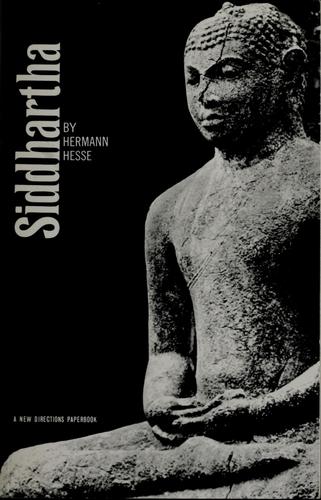
Siddhartha
Hermann Hesse (1922)
“A Brahmin's son walks away from everything — family, religion, love, wealth — in search of a self that cannot be taught.”
Why This Book Matters
Published in 1922 to modest success, Siddhartha became one of the most widely read novels in the world during the 1960s and 70s counterculture movements, particularly in the United States, where it sold millions of copies. It remains a standard text in high school and college comparative literature and world religion courses. Hesse won the Nobel Prize in 1946, partly on the strength of this novel and Steppenwolf.
Firsts & Innovations
One of the first major Western novels to present Eastern religious philosophy from the inside, without either orientalist exoticism or condescension
Pioneered the use of meditative prose rhythm as a structural device — the prose is the teaching, not just a vehicle for it
One of the first bildungsromans to make the failure of all external education the central plot event — Siddhartha learns nothing from his teachers, which is the point
Cultural Impact
Sold over 10 million copies worldwide — enduring bestseller for over a century
Became a touchstone text for the 1960s counterculture: read alongside Be Here Now, the Bhagavad Gita, and Alan Watts
Introduced millions of Western readers to the concept of Atman, Om, Samsara, and the distinction between spiritual knowledge and spiritual experience
Influenced the Beat Generation (Jack Kerouac, Allen Ginsberg) and the subsequent human potential movement
Still assigned in over half of American high schools in comparative literature, world history, and AP English courses
The phrase 'the river of life' — while ancient — gained renewed cultural currency through this novel
Banned & Challenged
Banned in Nazi Germany (1933-1945) partly because Hesse had been an outspoken pacifist critic of German nationalism in World War One, and partly because of the novel's celebration of Eastern (non-Aryan) philosophy. Hesse lived in Switzerland from 1912 onward and was effectively exiled from German literary culture during the Nazi period.